
Table of Contents
- Top Live Streaming Alternatives to Moment2moment
- Comparison Table: Features and Pricing
- Professional Event Streaming Production Services
- Corporate Live Streaming Services: Managed vs Self-Service
- Secure Corporate Broadcast Technology and Data Protection
- Setting Up Your Live Stream: Hardware and Bandwidth Requirements
- Choosing the Right Alternative for Your Event Type
- Conclusion
Last Updated: August 17, 2026
Top Live Streaming Alternatives to Moment2moment
Finding the right live streaming platform depends on your event type, audience size, and technical requirements. Moment2moment may have served your needs in the past, but the landscape of professional live streaming solutions has expanded significantly, offering alternatives tailored to corporate broadcasts, hybrid events, webinars, and large-scale productions.
Webcasting Livestream stands out as a purpose-built alternative for Australian organisations seeking end-to-end managed streaming services. Unlike DIY platforms that require technical expertise, Webcasting Livestream handles the entire production workflow, from equipment setup to post-event recording, with a no drop off guarantee and broadcast-quality output across all devices. Their bonded 4G/5G internet infrastructure ensures reliable streaming even in regional areas where connectivity varies, addressing a common pain point for organisations operating across multiple states.
The choice between alternatives ultimately comes down to your operational capacity. Some organisations prefer fully managed services where technicians handle everything on-site. Others want more control and are willing to invest in self-service platforms. And some need hybrid solutions that combine professional production with attendee engagement tools. Below, we explore the key alternatives and help you identify which fits your event requirements.
Comparison Table: Features and Pricing
| Platform | Service Type | Best For | Key Differentiator |
|---|---|---|---|
| Webcasting Livestream | Fully Managed | Corporate events, conferences, AGMs | no drop-off, content ownership, HD across all devices |
| OnAIR by EventsAIR | Virtual Event Platform | Complex hybrid events, large conferences | All-in-one event management, unlimited attendees, no per-viewer fees |
| Redback Conferencing | Managed Webcast | Corporate briefings, product launches, training | Custom branding, real-time analytics, multi-language captions |
| Present Live Productions | Professional Production | Broadcast-quality events, sports, high-profile launches | Decades of broadcast TV experience, seamless hybrid integration |
Each platform addresses different operational needs. Webcasting Livestream excels when you need a turnkey solution with zero technical overhead and guaranteed reliability. OnAIR suits organisations managing registration, networking, and complex attendee journeys alongside streaming. Redback Conferencing bridges managed services and self-service customisation. Present Live Productions delivers when broadcast-level production quality is non-negotiable.
Professional Event Streaming Production Services
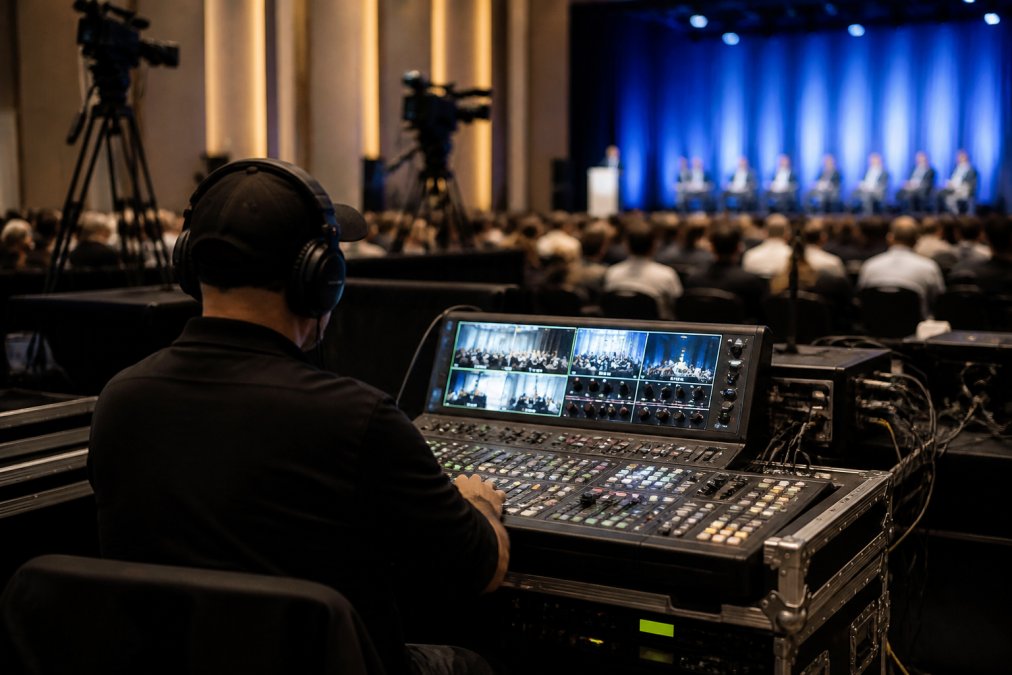
Professional production services handle everything from pre-event planning through post-broadcast analytics. This approach eliminates the technical burden entirely, your team focuses on content while specialists manage equipment, troubleshooting, and quality control.
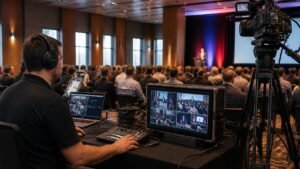
Webcasting Livestream operates as a fully managed service provider across Australia. Their model includes on-site technicians, professional broadcast-quality cameras, dedicated audio engineering, and bonded multi-network connectivity (Telstra, Optus, Vodafone 4G/5G). You don’t purchase software or manage infrastructure; instead, you contract for event delivery. This removes the risk of technical failure during critical communications like AGMs, product launches, or executive announcements.
The value of professional production becomes apparent when complications arise. Regional connectivity issues, unexpected audio feedback, camera positioning challenges, or last-minute format changes, these aren’t edge cases. They happen regularly. A professional team anticipates these scenarios and resolves them in real-time without disrupting your broadcast. Webcasting Livestream’s no-drop-off guarantee means your stream stays live regardless of individual network failures, because their bonded internet automatically reroutes traffic.
OnAIR by EventsAIR takes a different approach, positioning itself as an all-in-one event management platform rather than a pure streaming service. It handles registration, agenda management, virtual exhibition halls, networking features, and live streaming within a single ecosystem. This works well for organisations hosting complex multi-day conferences where attendees need to navigate sessions, connect with speakers, and access on-demand recordings. However, OnAIR requires you to manage your own broadcast setup or integrate a separate streaming tool.
Present Live Productions and Redback Conferencing similarly offer professional management but with varying emphasis. Present Live Productions emphasises broadcast-quality aesthetics and seamless hybrid experiences (blending in-room and remote audiences). Redback Conferencing focuses on corporate communication scenarios with customisable branding and detailed post-event reporting on attendee engagement.
Corporate Live Streaming Services: Managed vs Self-Service
The managed versus self-service decision shapes your entire operational model. Managed services eliminate technical complexity but reduce granular control. Self-service platforms offer flexibility but demand internal technical capacity.
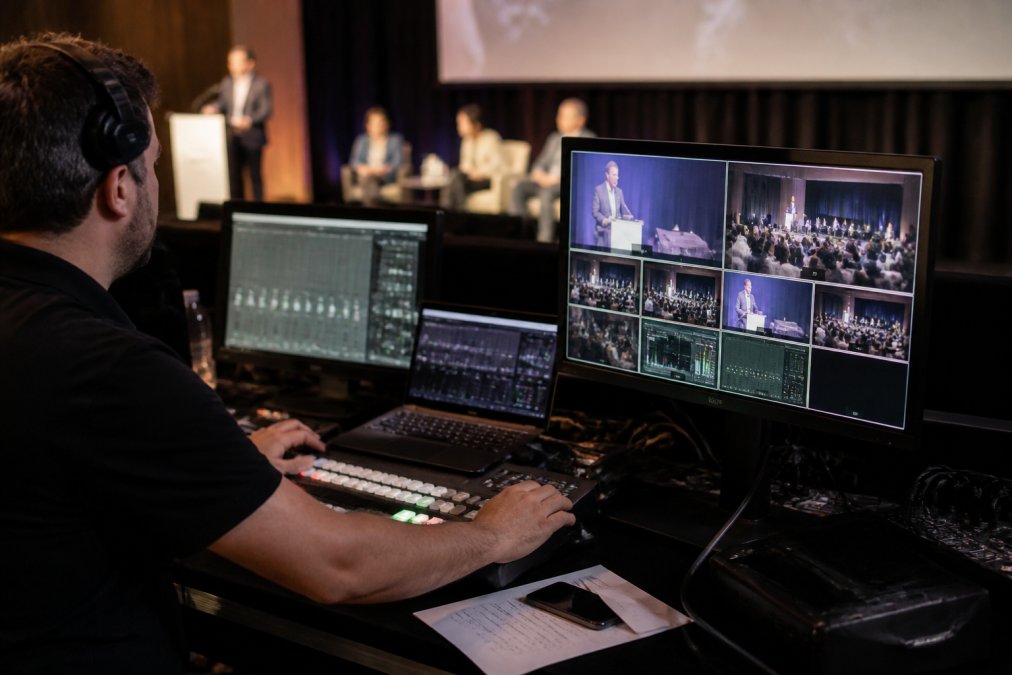
Managed Services: Webcasting Livestream, Redback Conferencing, and Present Live Productions all operate on managed models. You describe your event, they handle setup, execution, and troubleshooting. Your IT team doesn’t need to learn new software or troubleshoot connectivity during the broadcast.
A common objection is cost. Managed services charge per-event fees, which seems expensive for frequent streamers. However, the calculation shifts when you factor in staff time, equipment investment, and the risk of failed broadcasts. A failed stream during an AGM, where shareholders are watching, carries reputational and financial consequences. Managed services insure against this risk.
Self-Service Platforms: OnAIR by EventsAIR operates on a subscription model. You manage the platform, configure your event, and handle technical setup. This gives you flexibility to run multiple events at your own pace and customise the attendee experience extensively. The trade-off is that your team owns the technical execution. If bandwidth drops, if audio cuts out, if the stream crashes, your team troubleshoots it.
Self-service works well for organisations with dedicated AV or IT staff who enjoy technical control and want to build repeatable processes. It works poorly for organisations with stretched resources or low streaming frequency.
Hybrid Approach: Some organisations use managed services for high-stakes events (AGMs, product launches, investor presentations) and self-service platforms for routine webinars and training sessions. This balances cost, control, and risk appropriately.
Secure Corporate Broadcast Technology and Data Protection
Security concerns often go unspoken until something goes wrong. Broadcasting sensitive internal communications, earnings calls, strategic announcements, confidential training, requires technology that prevents unauthorised access and data leakage.
Webcasting Livestream addresses this through private streaming pages with granular access control. You can restrict viewers to authenticated users, limit concurrent viewers, and set expiration dates on replay access. Their infrastructure uses end-to-end encryption, and content remains under your ownership, not stored on third-party servers accessible to the platform vendor.
This ownership distinction matters. Some platforms retain rights to your content or store recordings on shared infrastructure. Webcasting Livestream’s model ensures your recordings stay yours, with no hidden fees for download or reuse. If you need to archive the stream for compliance purposes or repurpose it for training, you own that asset.
OnAIR by EventsAIR emphasises enterprise-grade security with 24/7 support and compliance certifications. For organisations handling sensitive attendee data or regulated content, this level of oversight is valuable. Redback Conferencing similarly offers secure streaming with options for closed-caption integration and multi-language support, useful for inclusive communications that still need security boundaries.
Regional considerations matter too. Organisations with offices across multiple states need assurance that streaming infrastructure works reliably in areas with variable connectivity. Webcasting Livestream’s bonded 4G/5G approach, using multiple network providers simultaneously, ensures streams stay live even when one carrier experiences congestion or outages. This is particularly important for regional events where metro-centric platforms might struggle.
Setting Up Your Live Stream: Hardware and Bandwidth Requirements
Technical setup determines whether your stream will be reliable or prone to failure. Understanding these requirements helps you choose between managed services (where the provider handles setup) and self-service platforms (where you manage it).
Bandwidth Requirements: Most professional live streams require 5-10 Mbps upload speed for HD quality. This sounds straightforward, but it’s where many organisations encounter problems. Your office broadband might advertise 100 Mbps download speed but only 10 Mbps upload. If multiple departments are using the connection simultaneously, available upload bandwidth drops further. Video conferencing, file uploads, and routine internet traffic consume capacity, leaving insufficient bandwidth for a stable stream.
Managed services solve this through bonded internet, combining multiple carriers so that if one connection degrades, others compensate. This is what Webcasting Livestream provides. Self-service platforms require you to manage this yourself, which often means upgrading your broadband plan or installing dedicated streaming internet (typically more expensive).
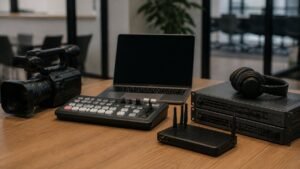
Hardware Considerations: Professional streaming requires broadcast-quality cameras, audio equipment, and encoding hardware. Entry-level setups cost several thousand dollars. Mid-range professional setups cost ten to twenty thousand dollars. This is why many organisations choose managed services, the provider owns the equipment and depreciates it across multiple events.
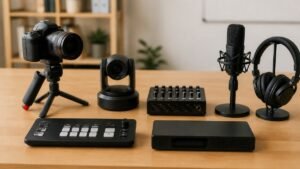
If you’re building in-house capability, you’ll need:
- Broadcast-quality camera (minimum 4K capable)
- Professional audio mixer and microphones
- Encoder hardware or software (for converting video to streamable format)
- Reliable internet connection (bonded or dedicated)
- Backup power supply (UPS) to prevent mid-stream shutdown
The encoder is critical. It compresses video and audio into a format that streams smoothly over internet connections. Poor encoding settings cause buffering, quality drops, or stream crashes. This is technical work requiring expertise.
Latency Considerations: Latency is the delay between live action and what viewers see. Most viewers tolerate 5-10 seconds of latency. Beyond that, the experience feels "off", like watching a sports broadcast with commentary slightly ahead of the action. Professional streaming requires encoder configuration to balance latency against reliability. Higher latency improves stability; lower latency feels more "live" but risks buffering if bandwidth fluctuates.
Managed services handle these trade-offs automatically. Self-service platforms require you to understand and configure these settings.
Choosing the Right Alternative for Your Event Type
Event type determines which alternative best serves your needs. Different scenarios have different priorities.
Corporate AGMs and Shareholder Meetings: These require guaranteed reliability and professional appearance. Executives presenting to shareholders cannot tolerate technical failures. Webcasting Livestream’s no-drop-off guarantee and managed approach eliminates risk. You need a service provider who will take responsibility if something fails, not a platform where your IT team scrambles during the broadcast.
Product Launches and Press Events: Similar to AGMs but with added emphasis on broadcast quality and media presence. Present Live Productions excels here because of their broadcast television background. They understand how to compose shots, manage audio for press presence, and deliver professional-grade output that looks polished across media coverage.
Internal Training and Webinars: These tolerate more technical simplicity and often run frequently. OnAIR by EventsAIR’s self-service model works well here. You configure once, run multiple sessions, and handle technical issues in-house. Cost per event is lower than managed services.
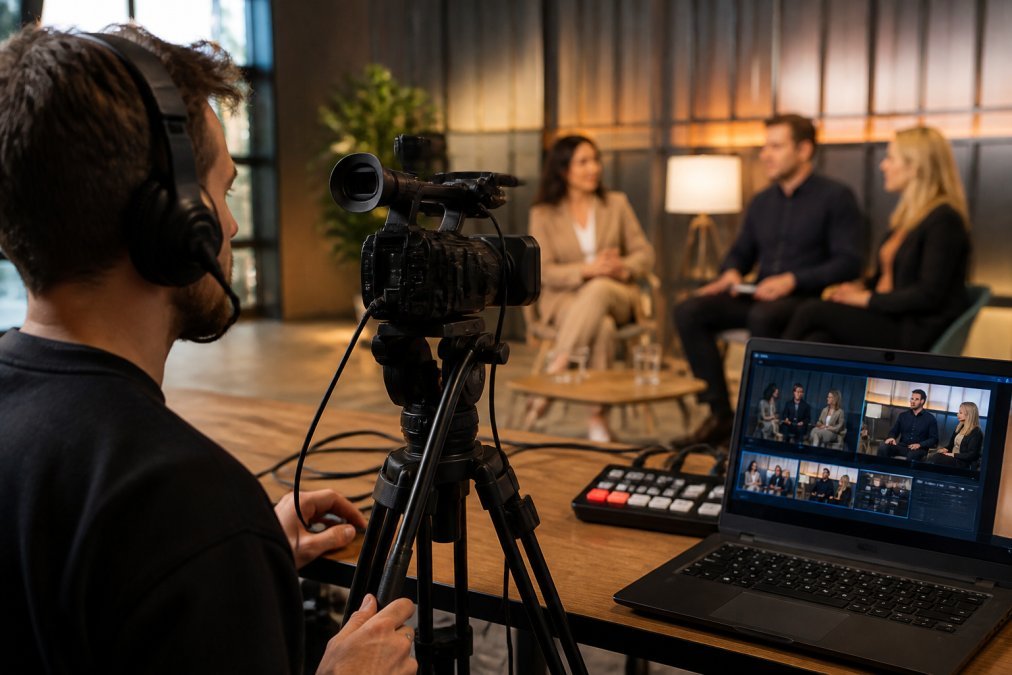
Hybrid Events (In-Room + Remote): These require seamless integration between physical and virtual audiences. Redback Conferencing and Present Live Productions both specialise in hybrid delivery, ensuring remote attendees feel included rather than like second-class participants. This requires professional camera work, audio mixing, and engagement tools that self-service platforms struggle to deliver.
Multi-Day Conferences: OnAIR by EventsAIR shines here because it manages registration, scheduling, networking, and streaming within one ecosystem. Attendees navigate the platform for all event functions rather than juggling multiple tools.
A practical framework: if your event is high-stakes (executive visibility, shareholder communication, media presence), choose managed services. If your event is routine and your team has technical capacity, self-service platforms work. If your event is complex (hybrid, multi-day, with engagement requirements), choose platforms with comprehensive event management features.
Conclusion
Live streaming alternatives to Moment2moment range from fully managed services to self-service platforms, each addressing different operational needs. For organisations prioritising reliability and professional execution, Webcasting Livestream delivers end-to-end management with a no-drop-off guarantee, ensuring your corporate communications stay live regardless of technical complications. Their bonded internet infrastructure, professional on-site technicians, and content ownership model address the real concerns Australian organisations face, regional connectivity variability, stretched IT resources, and the reputational risk of failed broadcasts. Get a quote from Webcasting Livestream and discover how their HD streaming across all devices, fail-safe procedures, and included recording services eliminate the technical burden from your next event.
Frequently Asked Questions
What should I look for in a live streaming alternative to Moment2moment?
Prioritise reliability (uptime guarantees), broadcast quality across devices, content ownership, professional support, and scalability to your expected viewer count. For corporate events, verify the platform handles multi-camera setups, secure streaming options, and provides full recordings. Check whether the service offers managed production or self-service tools based on your technical capacity.
Is professional event streaming production worth the cost compared to DIY platforms?
Professional production eliminates technical failures during critical events. Managed services handle camera work, audio mixing, real-time troubleshooting, and failover systems, reducing risk for high-stakes broadcasts like AGMs or product launches. DIY platforms suit smaller, lower-risk events where you control technical setup. For audiences over 1,000 or sensitive communications, professional production delivers reliability that justifies the investment.
How do corporate live streaming services handle bandwidth and network issues in regional areas?
Leading providers use bonded multi-network technology (combining Telstra, Optus, and Vodafone connections) to ensure stability across varying internet quality. This failover approach automatically switches between networks if one degrades, critical for regional venues. Confirm your chosen service tests bandwidth at your location beforehand and offers on-site technical support to manage connectivity during the event.
What security measures should I expect from secure corporate broadcast technology?
Enterprise-grade services encrypt end-to-end streams, offer private streaming links (not publicly indexed), support password protection, and provide detailed access logs. For sensitive internal communications, verify the platform complies with Australian privacy standards and doesn't share viewer data with third parties. Ask about IP whitelisting, geo-blocking options, and whether recordings are stored securely with restricted download access.
This article was written using GrandRanker