How to Increase Shareholder Engagement in Virtual Meetings
Last Updated: November 5, 2026
Quick Summary
Increasing shareholder engagement during virtual meetings works best when the format is treated as an access decision, not a cost decision: removing travel and scheduling clashes means more holders show up. Build every other choice around the format, from notice through to follow-up.
- Virtual-only meetings give the widest reach and the lowest cost per attendee.
- Collect questions in writing from the moment the notice goes out so quieter holders get a fair shot.
- Publish unanswered questions with answers within a set period after the meeting to close the loop.
- Pick engagement tools that fit the agenda and tell holders in the notice which tools will be used and when.
- Define three or four KPIs before the meeting and track them year on year against your own past meetings.
Table of Contents
- Why Virtual Meetings Can Lift Shareholder Participation
- Virtual AGM Best Practices: Formats, Notice and Preparation
- How to Facilitate Q&A in Virtual Meetings Without Losing Control
- Virtual Meeting Engagement Tools That Actually Get Used
- Designing for Accessibility and Inclusive Participation
- A Timed Engagement Plan: Before, During and After the Meeting
- Measuring Shareholder Engagement With Defined KPIs
- Technical Failure and Meeting-Continuity Playbooks
- Frequently Asked Questions
Why Virtual Meetings Can Lift Shareholder Participation
Virtual formats remove the biggest barrier to attendance: distance. A shareholder who would need to fly interstate for a two-hour meeting can now join from a kitchen table. That single change often lifts turnout more than any engagement campaign.
Increasing shareholder engagement during virtual meetings works best when the format is treated as an access decision, not a cost decision. Remove travel, remove scheduling clashes, and more holders show up.
Below, we’ll show you exactly how to build that meeting, from notice through to follow-up.
Virtual AGM Best Practices: Formats, Notice and Preparation
The best virtual AGM practice is to decide the format first, then build every other choice around it. Get this order wrong and the rest of the planning becomes guesswork.
Choosing Between Virtual, Hybrid and In-Person Formats
Virtual-only meetings give the widest reach and the lowest cost per attendee. Hybrid meetings suit companies with a core of local holders and a long tail of remote ones. In-person meetings still matter when the room itself carries weight, such as a contested resolution.
- Virtual-only: best reach, simplest logistics, needs strong platform support
- Hybrid: balances local tradition with remote access, needs two production streams
- In-person: highest ceremony, lowest reach
Whichever you pick, check your constitution and the Corporations Act 2001 requirements for member meetings before you commit. Meeting format rules sit in your own governing documents too.
Identity Verification, Secure Login and Voting Integrity
Shareholders need a login that proves who they are without locking them out. Use a unique meeting code tied to their holder record, plus a second check such as date of birth or holder number.
Voting integrity rests on three things: one vote per holder, a clear audit trail, and a result the chair can verify in the room. Run a test poll before the meeting opens.
How to Facilitate Q&A in Virtual Meetings Without Losing Control
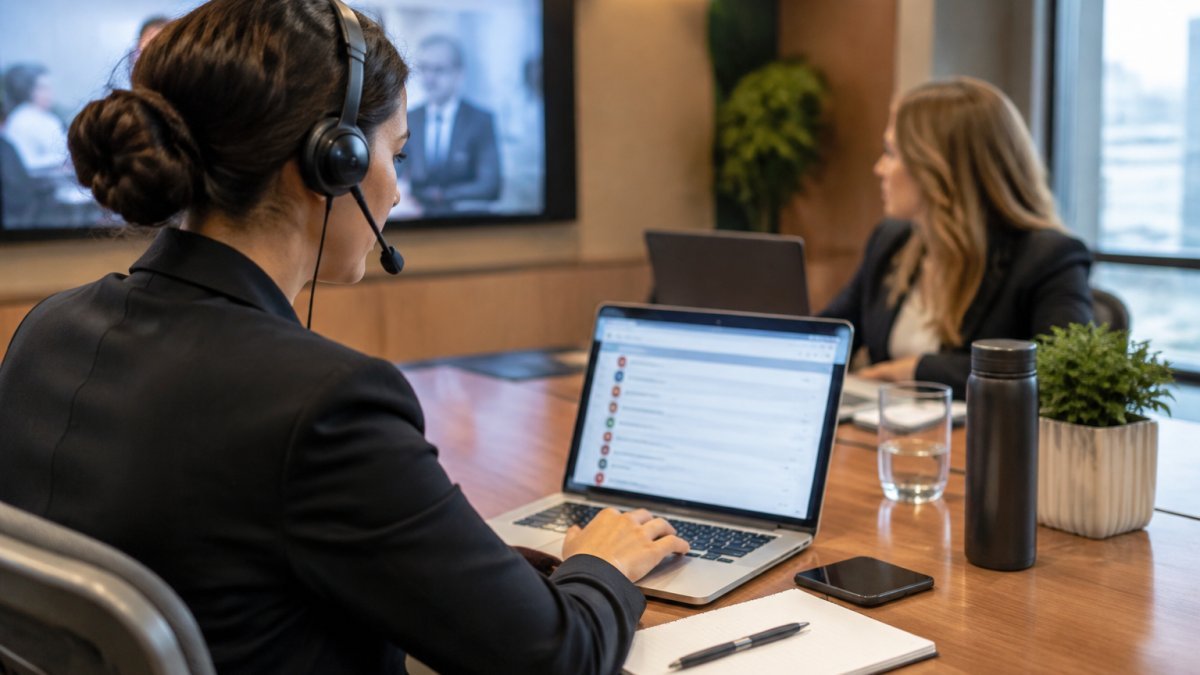
How to facilitate Q&A in virtual meetings comes down to one rule: questions flow through a queue, not an open mic. Structure protects both the chair and the shareholder. But a queue on its own is not a moderation policy. The companies that handle Q&A well publish the rules before the meeting, apply them consistently in the room, and account for every question afterwards.
Question Submission, Moderation and Fair Handling
Collect questions in writing from the moment the notice goes out. Text submission gives quieter holders a fair shot and gives moderators time to group similar points.
Publish the moderation rules in the notice so no one is surprised on the day. At a minimum, state:
- How questions can be submitted (in writing, by phone, or live in the meeting)
- The cut-off for live questions and how written questions are prioritised
- How duplicate or closely related questions will be grouped
- The grounds on which a question may not be answered live (for example, it concerns a matter that is confidential, defamatory, or already answered in the notice)
- How unanswered questions will be handled after the meeting
On the day, work the queue in a fixed order. A workable sequence is: questions submitted in advance first, then live written questions in the order received, then questions from the phone line. Group duplicates and answer once, naming the holders whose questions were grouped.
Watch out: rejecting a question without explanation is the fastest way to lose trust. State the reason on screen or in the meeting record, or answer it in writing after the meeting.
Prioritising, Grouping and Publishing Unanswered Questions
A queue only stays fair if the chair can show how it was worked.
Prioritise by relevance to the resolutions on the agenda, not by who is loudest or most senior. Questions on a resolution up for vote should come before general questions.
Publishing the unanswered questions, with answers, within a set period after the meeting is the step most companies skip.
A short rehearsal with the chair and moderator pays for itself. Run through the queue interface, agree who reads which question, and decide in advance how the chair will handle a hostile or repetitive question.
Virtual Meeting Engagement Tools That Actually Get Used
The engagement tools that get used are the ones with one obvious purpose, introduced before the meeting and tied to a specific agenda item. Polls, live Q&A, and discussion boards work. A feature nobody was told about does not. Consistent application of these functional elements creates a reliable framework to improve team engagement metrics across both virtual shareholder gatherings and internal operational reviews.
Matching Tools to Agenda Items
Pick tools that fit the agenda, and tell holders in the notice which tools will be used and when. A poll on a remuneration report lands well because holders have a view and the result is visible in the room. A poll on nothing in particular wastes the room’s time and teaches holders to ignore the next one.
A workable mapping looks like this:
- Resolutions up for vote: a formal poll with a published result, run at a stated point in the agenda
- Chair’s report or strategy update: a live written Q&A queue, opened for the duration of the item
- Remuneration or sustainability items: a non-binding sentiment poll, clearly labelled as indicative only
- General business: a discussion board or written question form, open from notice to meeting close
- Post-meeting: a short feedback survey sent with the results pack
Label indicative polls as indicative. A sentiment poll that looks like a vote but is not one creates confusion, and confusion depresses participation at the next meeting.
Platform Functionality That Matters for Engagement
Not every feature on a platform’s sales sheet improves engagement. The ones that do are the ones holders can find and use without a guide:
- A single login that works on mobile, desktop, and phone dial-in
- A visible question queue with confirmation that a question has been received
- Polls that show a result within seconds of closing
- Captions and a transcript that holders can switch on themselves
- A recording that is available shortly after the meeting, not weeks later
For shareholder engagement, the platform should also keep a record. Uninterrupted broadcast technology for events matters here, because a dropped stream kills participation faster than a dull agenda. A platform that loses the question queue mid-meeting, or that cannot export the poll results, creates work for the company secretary and erodes trust with holders.
Watch out: buying a platform with dozens of features and using three of them is a common pattern. A smaller set of tools that holders are told about in advance will outperform a feature-rich platform nobody was trained on.
Designing for Accessibility and Inclusive Participation
Accessibility is not a nice extra. It decides whether a holder with a disability, a slow connection, or limited English can take part at all.
- Offer captions and a transcript (Making Audio and Video Media Accessible | Web Accessibility Initiative (WAI))
- Keep a phone dial-in option for low bandwidth
- Provide large-text and high-contrast versions of the notice
- Publish materials in plain English
- Allow questions in advance for anyone who cannot type live
A common mistake is testing accessibility on a fast office connection. Test on a mobile phone on a weak signal instead.
A Timed Engagement Plan: Before, During and After the Meeting
A timed plan beats good intentions. Map engagement to the calendar and each stage gets its own job.
| Stage | Timing | Key Actions |
|---|---|---|
| Before | Notice to 7 days out | Send notice, open question submission, publish a short how-to-join guide |
| During | Meeting day | Run polls, moderate the Q&A queue, read out submitted questions |
| After | Within 7 days | Publish results, answer unanswered questions, share the recording |
The after stage is where most companies drop the ball. Archiving and managing virtual AGM recordings gives holders a reason to come back next year.
Measuring Shareholder Engagement With Defined KPIs
Define your KPIs before the meeting, or you will argue about what the numbers mean afterwards. Pick three or four and track them year on year.
- Attendance rate: holders present against holders eligible
- Participation rate: holders who voted or asked a question
- Question response rate: questions answered against questions received
- Feedback score: a short post-meeting survey
Track these against your own past meetings rather than an industry average. Measuring hybrid event success is easier when the baseline is your own.
Technical Failure and Meeting-Continuity Playbooks
Every virtual meeting needs a plan for the moment something breaks. A continuity playbook turns a crisis into a pause.
- Run a full rehearsal on the same equipment
- Keep a backup connection and a backup encoder
- Nominate one person to make the call to switch
- Have a phone bridge ready as a last resort
- Record everything, so nothing is lost
Watch out: testing only on the day of the meeting is the mistake we see most. Rehearse a week out, then again 48 hours before.
Our technical failures you can avoid with live streaming services guide covers the common break points. If your team is stretched, technical support for hybrid event streaming takes the troubleshooting off your plate.
Virtual meetings only lift participation when the format, the moderation, and the fallback plan all work together. That is the hard part, and it is where most companies come unstuck.
Webcasting Livestream builds that reliability into the broadcast itself. Our fail-safe procedures are designed so streams do not fail, with HD quality across all devices.
Get started with Webcasting Livestream and run a virtual AGM your shareholders actually turn up for.
Frequently Asked Questions
How do you make virtual shareholder meetings more interactive?
Build interaction into the agenda rather than bolting it on. Open the question queue before the meeting so shareholders can submit in advance, run live polls after each resolution, and keep a moderator responding in the chat throughout. Give directors time to answer questions properly instead of rushing at the end. Tools like polls, discussion boards and messaging apps only help if someone is assigned to run them, so name a facilitator and a moderator in your meeting preparation.
What are the best practices for virtual AGMs under the Corporations Act 2001?
Australian corporate law sets the framework for virtual and hybrid meetings, and your constitution must allow the format you choose. Practical best practices include clear meeting notices, a tested identity verification and secure login process, a voting framework that records electronic votes accurately, and minutes that capture how questions were handled. Check your specific obligations with your legal advisers, then rehearse the whole flow before the day.
How can technology improve shareholder engagement in virtual settings?
Technology removes the travel barrier that keeps smaller shareholders away, and it gives you data you never get in a physical room. Electronic voting, live Q&A, polls and discussion boards let people participate in real time, while attendance rate, participation rate and question response rate tell you whether engagement is actually improving. The catch is reliability: a platform that drops the stream destroys trust, so choose a provider with fail-safe procedures and a recording you own.
How do you ensure equitable access for shareholders in virtual meetings?
Equitable access means planning for shareholders with disabilities, limited bandwidth and language needs, not just the ones on fast connections. Offer captions, a dial-in audio option, readable documents and a phone-friendly interface, and test the stream on mobile before the meeting. Publish a technical support line and a simple registration process well ahead of time. If you run a hybrid meeting, give remote shareholders the same chance to ask questions and vote as those in the room.