Table of Contents
- Why Uninterrupted Broadcast Technology Matters for Events
- Cost Efficiency and Reduced Overhead
- Expanding Your Audience Reach and Global Accessibility
- Redundant Internet Connection for Live Events
- Best No Glitch Streaming for Enhanced Audience Engagement
- Professional Live Streaming Equipment Requirements
- Building Brand Authority Through Reliable Broadcasts
- Frequently Asked Questions
Last Updated: September 24, 2026
Why Uninterrupted Broadcast Technology Matters for Events
Uninterrupted broadcast technology is essential for organisations hosting events beyond a physical venue. Broadcast stability directly impacts audience retention, brand perception, and event ROI. A stream failure mid-presentation destroys credibility instantly, viewers abandon the broadcast, engagement plummets, and you’re managing a crisis instead of celebrating success.
Your audience expects professional television quality. A single glitch can overshadow months of planning. Uninterrupted broadcast technology eliminates that risk by building redundancy, failover protocols, and real-time monitoring into every layer of your streaming infrastructure, systems so strong that viewers never know a backup was needed.
Cost Efficiency and Reduced Overhead
Reliable streaming doesn’t require massive capital expenditure. Uninterrupted broadcast technology reduces costs by eliminating expensive workarounds and failures. Upfront investment in redundant systems avoids hidden costs: emergency support calls, repeat broadcasts, lost sponsorships, and reputation damage.
A stream failure during a product launch forces rescheduling, requiring additional production time, talent coordination, and venue costs. The real expense is the downstream consequences of failure, not the technology itself.
Remote production capabilities reduce on-site overhead significantly. Centralise playout and monitoring at a professional broadcast centre, cutting travel expenses, accommodation, and coordination complexity, substantial savings for organisations hosting multiple regional events.
Expanding Your Audience Reach and Global Accessibility
Uninterrupted broadcast technology transforms your event from a physical gathering into a distributed experience reaching audiences worldwide. With stable, high-definition broadcast capability, you access every timezone, remove geographical constraints, and scale audience size without scaling venue capacity.
A company hosting a conference in a smaller city can attract attendees from every major metropolitan area across the country and internationally. Educational institutions can deliver seminars to students across multiple campuses simultaneously.
If your stream is unreliable, international viewers skip the event. Uninterrupted broadcast technology guarantees that viewers in Sydney, Melbourne, and London experience the same seamless, high-definition feed, building trust and encouraging repeat viewership.
Redundant Internet Connection for Live Events
Internet connectivity failure is the single biggest threat to any live stream. A redundant internet connection for live events is non-negotiable infrastructure for professional broadcasting. The architecture, failover logic, and monitoring protocols determine whether your broadcast survives an outage seamlessly or fails catastrophically.
Bonded Connectivity and Load Balancing
Professional broadcast systems use bonded internet connections, where two or more independent connections from different providers are actively used simultaneously. This distributes bandwidth across both connections, improving throughput and resilience. If one connection degrades or fails, the system automatically redistributes traffic without interrupting the stream. Bonded systems continuously test both connections, so failover decisions are based on real-time performance data rather than binary “up or down” checks.
Load balancing across multiple connections protects against congestion. During peak audience moments, bonded connectivity distributes load across multiple pipes from different providers using different network paths. This network-layer redundancy separates professional broadcast infrastructure from consumer-grade streaming.
Failover Timing and Latency Considerations
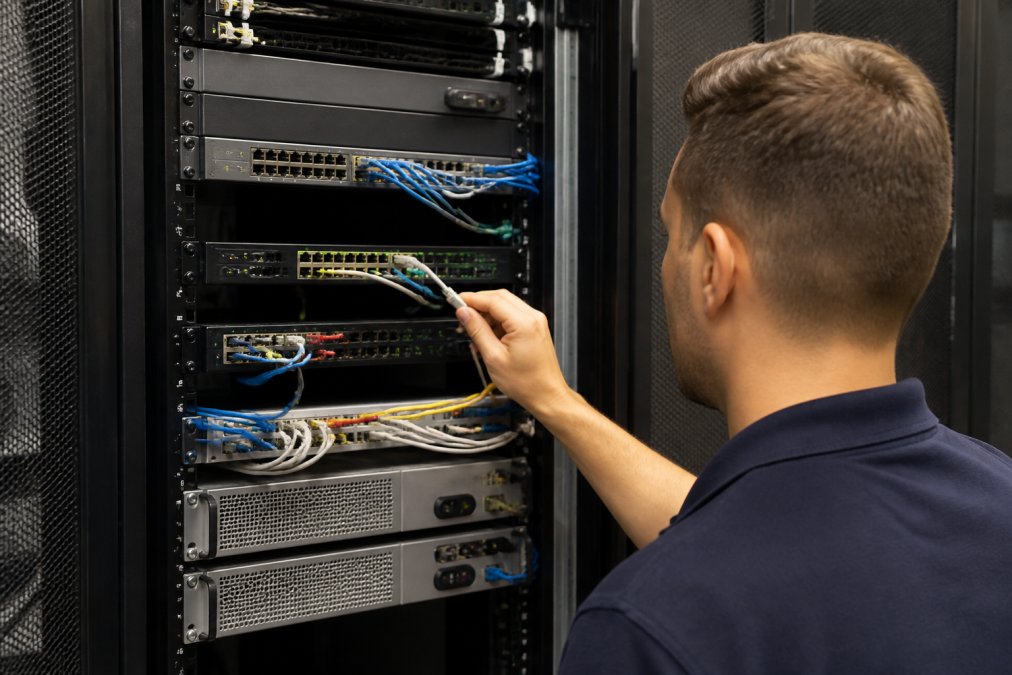
Failover must occur in milliseconds (typically 100-500 ms) so viewers don’t perceive an interruption. Intelligent network equipment continuously monitors connection health, packet loss, and latency on both lines. If latency spikes or packet loss exceeds a threshold, the system proactively shifts traffic before complete failure occurs.
Consumer-grade routers take 10-30 seconds to detect failure and switch over. Professional managed switches and failover appliances detect degradation in milliseconds and execute the switch with minimal disruption, critical for product launches, earnings calls, and breaking news broadcasts.
Provider Diversity and Geographic Redundancy
Your two internet connections should come from different providers using different physical infrastructure. If both run through the same cable duct or exchange point, a single failure can take both down. True redundancy means geographic diversity: one connection might be fibre from Provider A, the second wireless or copper from Provider B, routed through separate network paths.
For regional organisations or multiple-location events, geographic diversity is critical. A venue in a smaller town may need to combine fixed-line broadband with bonded cellular connections (4G/5G) to achieve true redundancy. The cost of a secondary connection is negligible compared to broadcast failure costs.
Monitoring and Real-Time Alerts
Redundant connectivity only works with active monitoring throughout your broadcast. Professional broadcast management systems continuously measure latency, jitter, packet loss, and available bandwidth on each connection. If either degrades below acceptable thresholds, your team receives real-time alerts to investigate or adjust encoding parameters before viewers experience quality loss.
This monitoring also provides post-event diagnostics. After your broadcast, you can review exactly when and why failover events occurred, which connections performed best, and whether your redundancy architecture needs adjustment for future events. Over time, this data informs infrastructure decisions and helps you optimise costs by identifying which providers and connection types deliver the most reliable performance for your specific event locations and audience distribution.
Best No Glitch Streaming for Enhanced Audience Engagement
The term “best no glitch streaming” describes a technical standard where video quality, audio clarity, and stream stability are guaranteed throughout the entire broadcast. However, glitch-free streaming encompasses more than just technical reliability; it also requires protecting your broadcast from security threats that can interrupt service or compromise content integrity.
Viewer Engagement and Quality Perception
Viewers stay engaged when they’re not distracted by buffering, pixelation, or audio dropout. A glitch-free experience keeps attention on your content, not on technical problems. Engagement metrics improve dramatically when viewers trust the broadcast quality. They’ll stay for the full duration, participate in live chat, and share the event with others. If your stream is unreliable, viewers close the window within seconds and move to other activities rather than risk wasting their time on a failing broadcast.
Achieving this standard requires several technical layers working together. Your encoding must be optimised for the bandwidth you’re using. Your content delivery network must have geographic distribution so viewers in remote areas get fast, stable delivery. Your playout system must have error correction and adaptive bitrate technology that adjusts quality based on network conditions without causing visible stuttering. For events expecting thousands of concurrent viewers, adaptive bitrate streaming (ABR) is essential, it automatically reduces resolution or frame rate on slower connections rather than causing buffering, maintaining a smooth viewing experience across all network conditions. Even with these safeguards in place, persistent network instability occasionally necessitates troubleshooting streaming issues to ensure that the final delivery remains uninterrupted for every participant.
Security as a Glitch Prevention Layer
What many event organisers overlook is that security breaches are a major source of broadcast interruptions. A Distributed Denial of Service (DDoS) attack targeting your streaming infrastructure can cause the same viewer experience as a network failure: buffering, dropped frames, or complete service outage. Stream hijacking, where an attacker gains control of your broadcast credentials and redirects your stream, is a reputational disaster that also interrupts legitimate viewers’ access.
Professional broadcast infrastructure includes security controls specifically designed to prevent these interruptions. This includes:
Credential Management: Streaming credentials (RTMP keys, API tokens) should be rotated regularly and never hardcoded into equipment or shared across multiple team members. If a credential is compromised, an attacker can attempt to inject false content into your stream or redirect it to a malicious server. Secure credential storage and rotation protocols prevent this.
DDoS Mitigation: Your content delivery network should include DDoS protection that distinguishes between legitimate viewer traffic and attack traffic. This is typically handled by your CDN provider (e.g., Akamai, Cloudflare, AWS CloudFront), which has the scale and intelligence to absorb attack traffic while allowing legitimate viewers through. Without this layer, a determined attacker can take your broadcast offline.
Encryption and Authentication: Your stream should be encrypted in transit (HTTPS/TLS for web players, encrypted RTMP for ingest), and your playout infrastructure should authenticate all incoming streams before accepting them. This prevents man-in-the-middle attacks where an attacker intercepts and modifies your broadcast.
Access Control: Not every team member needs access to streaming credentials or playout controls. Role-based access control ensures that only authorised personnel can start, stop, or modify your broadcast. This reduces the attack surface and makes it easier to audit who made changes if a security incident occurs.
Proactive Monitoring and Incident Response
Webcasting Livestream delivers glitch-free streaming through professional managed services that monitor every aspect of your broadcast in real time, not just quality metrics, but also security indicators. If a potential security threat is detected, systems can be isolated or credentials rotated in real time, preventing the threat from interrupting your broadcast.
This proactive approach to broadcast stability and security is what separates amateur streaming from professional-grade service. You’re not just getting redundant equipment; you’re getting a team that understands both the technical and security dimensions of uninterrupted broadcasting.
Professional Live Streaming Equipment Requirements
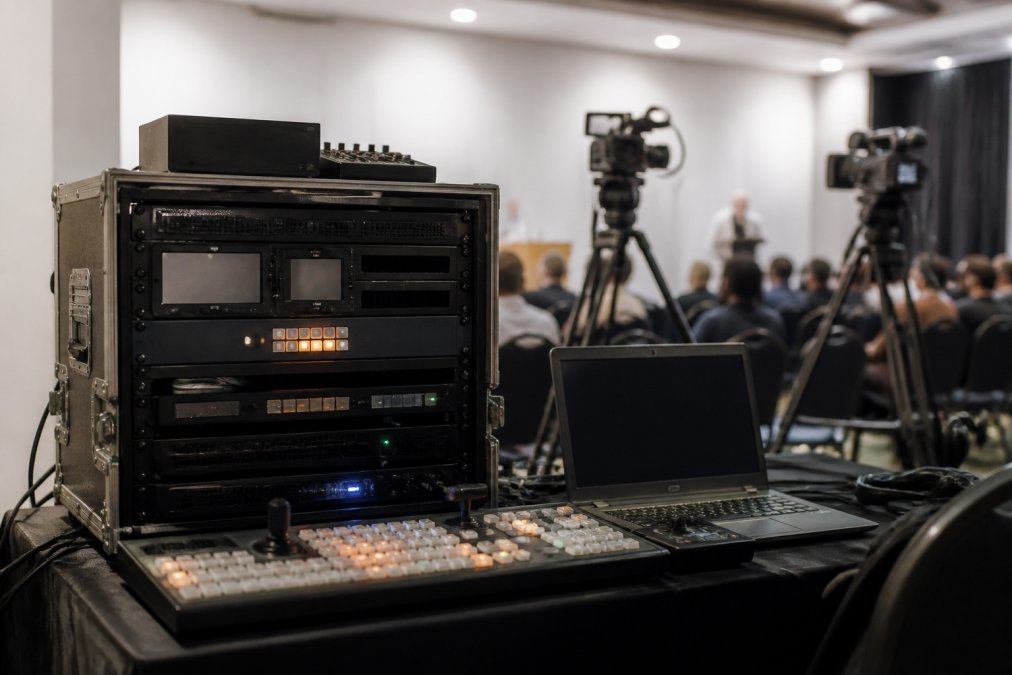
Professional live streaming equipment requirements go far beyond a camera and an internet connection. A properly configured system includes redundant servers, backup power supplies, failover network switches, and monitoring systems that alert your team to problems before they affect viewers.
Building Brand Authority Through Reliable Broadcasts
Your brand reputation is directly tied to broadcast reliability. When your event runs flawlessly, audiences perceive your organisation as professional, trustworthy, and technically competent. When your stream fails, audiences question your competence and your commitment to their experience.
Frequently Asked Questions
How does uninterrupted broadcast technology prevent stream failures during live events?
Uninterrupted broadcast technology uses redundant internet connections and automatic failover protocols to maintain streaming continuity. If one connection drops, the system instantly switches to a backup without interrupting the feed. This redundancy, combined with real-time monitoring and load balancing, ensures your audience never experiences a blackout, regardless of network fluctuations or equipment issues.
What professional live streaming equipment requirements ensure glitch-free broadcasts?
Professional-grade equipment includes dual internet connections, backup power supplies, high-definition cameras, reliable encoders, and monitored playout systems. The infrastructure must support multi-platform distribution with real-time bitrate adaptation to maintain quality across devices. Professional managed services handle all technical aspects, so your team doesn’t need to manage complex configurations, the provider ensures equipment works seamlessly together.
How does a redundant internet connection for live events improve reliability?
A redundant internet connection provides a primary and backup pathway for your stream. If your main connection fails, traffic automatically reroutes through the secondary connection without interruption. This is critical for high-stakes events where stream stability directly impacts audience retention and brand perception. Redundancy eliminates single points of failure and ensures broadcast stability even in regions with variable network quality.
What security measures protect sensitive content during live broadcasts?
Professional uninterrupted broadcast services include end-to-end encryption, secure authentication protocols, and access controls to restrict viewing to authorised audiences. Your content is delivered through secure infrastructure that prevents unauthorised access. Managed service providers handle all security implementation, ensuring sensitive internal communications, training content, or confidential announcements remain protected throughout the broadcast and recording.