
Table of Contents
- Why secure live streaming matters for government transparency
- Legislative compliance and regulatory requirements for council meeting live streaming policy
- Technical infrastructure for secure government meeting broadcasts
- Accessibility standards for public sector video streaming
- Cybersecurity and information security protocols
- Archiving, retention, and public access to meeting records
- Virtual and hybrid meeting protocols for government bodies
- Best practices for stakeholder engagement and digital governance
Last Updated: August 28, 2026
Why secure live streaming matters for government transparency
Secure live streaming for government meetings enables public accountability while protecting data integrity and participant safety. When councils broadcast proceedings, constituents access decision-making directly. However, unprotected streams risk interception, manipulation, and exposure of sensitive deliberations. This guide covers legislative compliance, technical infrastructure, cybersecurity protocols, and deployment strategies for secure government streaming across varying regional capacities.
Legislative compliance and regulatory requirements for council meeting live streaming policy
Government bodies in Australia operate under overlapping compliance frameworks that shape every technical decision. The Local Government Act establishes the foundation for open government and public participation, creating an implicit mandate for accessibility that live streaming fulfils effectively.
The Privacy Act governs what information can be broadcast (oaic.gov.au). Sensitive personal information, commercial-in-confidence discussions, and closed sessions must be handled separately from public broadcasts, requiring infrastructure that supports selective streaming.
The Government Information (Public Access) Act requires that public records, including meeting recordings, be retained and made accessible, creating a direct link between streaming infrastructure and archival obligations.
Data sovereignty matters increasingly. Government data must remain within Australian jurisdiction, affecting your choice of streaming platform and storage backend.
Accessibility standards under the Disability Discrimination Act require captions, audio descriptions, and compatible player technology (humanrights.gov.au). Real-time captioning capability and accessible playback options are legal requirements, not optional extras.
Failing to implement required accessibility features exposes councils to discrimination complaints and reputational damage. Budget for professional captioning services, not automated-only solutions.
Technical infrastructure for secure government meeting broadcasts
Secure live streaming requires a technical stack balancing availability, security, and performance. A typical deployment includes source encoding, content delivery, playback infrastructure, and recording systems.
Encoding and transmission from the meeting room must use encrypted protocols like RTMPS or SRT to prevent interception. The broadcast platform must support both public and restricted viewing modes without requiring separate technical setups.
Playback infrastructure must support adaptive bitrate streaming for reliable performance across varying network conditions, critical for regional areas. Recording and archival systems must handle multiple video qualities, ensure file integrity, and support long-term storage with metadata tagging for discovery.
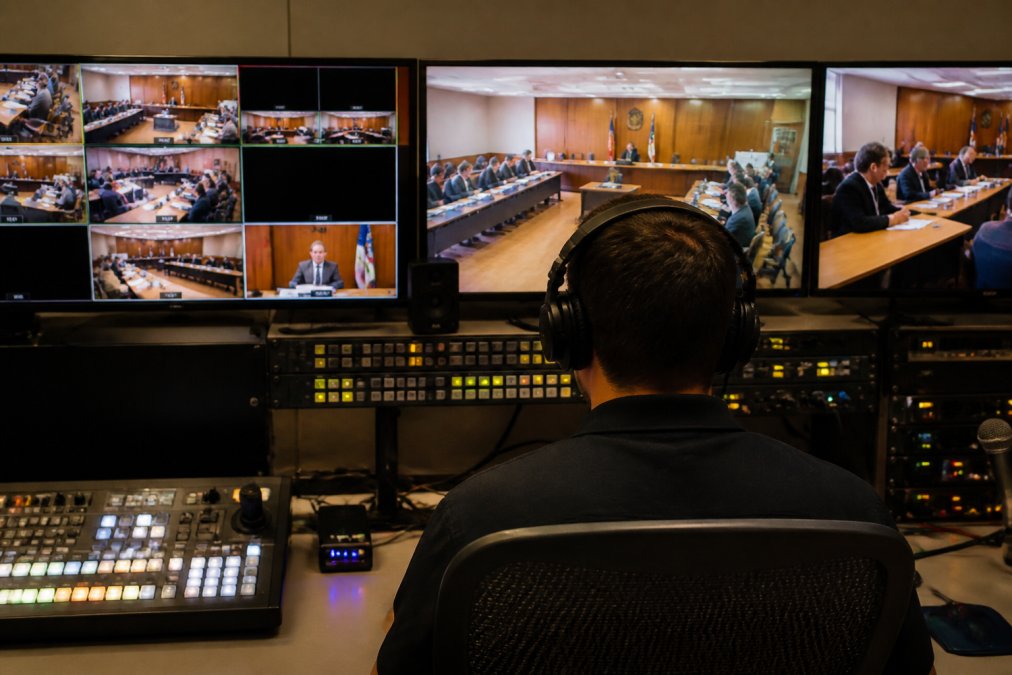
Your technical stack must support selective access (public vs. restricted sessions), adaptive bitrate delivery for regional reliability, and integrated recording with long-term archival.
Encryption and data sovereignty in government streaming
Transport encryption protects the stream as it travels from the meeting room to the platform and to viewers’ devices. HTTPS/TLS encryption is standard for web-based playback. RTMPS or SRT encrypt ingest connections, preventing interception or tampering.
At-rest encryption protects recorded files stored on disk or in cloud systems. If recordings are stored in Australian data centres with Australian-controlled encryption keys, you maintain compliance with data residency requirements.
Key management requires audit trails, access controls, and separation of duties. A single person should never hold all keys, and developers should never access production encryption keys.
Bandwidth management and video encoding standards
Regional variability in network capacity requires adaptive bitrate streaming. Viewers on fast connections receive high-quality video (1080p); viewers on slow connections receive lower quality (480p) with smooth playback. The player automatically switches between quality levels as network conditions change.
H.264 remains the standard for government use, offering wide support and efficient compression. Bitrate recommendations:
- 480p at 30fps: 1.5-2.5 Mbps
- 720p at 30fps: 3-5 Mbps
- 1080p at 30fps: 5-8 Mbps
Load balancing across multiple edge servers ensures no single point of failure. Geographic distribution reduces latency and improves playback performance.
For regional councils with limited upload capacity, consider recording locally at the meeting venue, then uploading the file after the meeting rather than streaming live.
Accessibility standards for public sector video streaming
Accessibility is a legal requirement under the Disability Discrimination Act. Live streams must be usable by people with disabilities, including visual, hearing, cognitive, and mobility considerations. tailored security plans.
Captions are the primary accessibility requirement. Real-time captions require professional captioning services or AI-powered automated captioning with human review. Automated captions alone often miss context-dependent accuracy; for government meetings where precision matters, human-reviewed captions are essential.
Audio descriptions narrate visual content for people who are blind or have low vision. Audio descriptions can be embedded in the video stream or provided as a separate audio track.
Colour contrast and readable fonts for any text overlaid on video must meet WCAG AA standards (at least 4.5:1 contrast ratio for body text).
Keyboard navigation for the video player ensures people who cannot use a mouse can control playback. Standard video players meet this requirement.
Transcript availability after the live stream ends provides an alternative for people with cognitive disabilities or those in noisy environments. Transcripts should be searchable and timestamped.
Cybersecurity and information security protocols
Secure live streaming requires a security posture beyond typical commercial streaming.
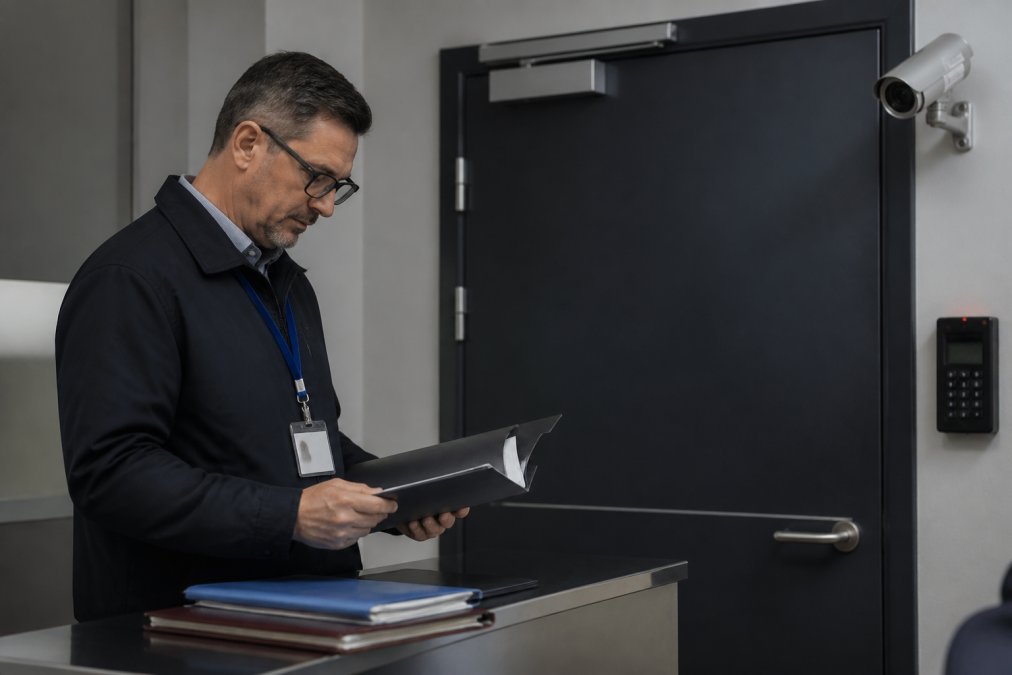
Network security starts with network segmentation. Meeting room networks should be isolated from general office networks. A dedicated streaming appliance should have minimal network connectivity, only necessary connections to ingest sources and outbound connection to the streaming platform.
DDoS mitigation protects against denial-of-service attacks that could take the stream offline. Streaming platforms typically include DDoS protection, which should be verified and tested.
Vulnerability management involves regular patching of streaming software, encoding devices, and playback infrastructure. Regular security updates and vulnerability scanning are necessary.
Secure configuration means disabling unnecessary features, using strong authentication, and following security hardening guidelines. A streaming appliance should run minimal software.
User authentication and content moderation
Restricted sessions require authentication before viewers can access the stream. Authentication mechanisms range from simple (password-protected streams) to complex (integration with government identity providers, multi-factor authentication).
Content moderation for live chat or viewer comments requires human oversight. Automated moderation can filter obvious spam but may miss context-dependent violations. A moderation policy should define acceptable content and enforcement procedures.
Viewer analytics track who watched, when they joined/left, and what quality they viewed at. This data should be collected only for operational purposes, with regular deletion of old data.
Disaster recovery and redundancy systems
A failed stream during a government meeting undermines transparency and creates political fallout. Redundancy ensures the stream continues if components fail.
Encoder redundancy means backup encoding devices. If the primary encoder fails, a secondary takes over automatically.
Network redundancy means multiple internet connections. A meeting venue might have primary broadband and backup 4G cellular.
Platform redundancy means your streaming platform is distributed and fault-tolerant across multiple data centres with automatic failover.
Failover procedures must be documented and tested quarterly. Backup recording at the meeting venue captures video independently of the streaming platform, preserving the record if the live broadcast fails.
Archiving, retention, and public access to meeting records
The stream is ephemeral; the recording is the permanent record. Archiving systems must preserve recordings in formats that remain accessible for decades.
File format selection affects long-term accessibility. MP4 files with H.264 video and AAC audio are widely supported and likely to remain playable.
Metadata tagging makes recordings discoverable. Each recording should include council name, meeting date, session type, and searchable transcripts.
Retention policies define how long recordings are kept. Public meetings typically require indefinite retention. Retention policies should be documented and enforced through automated systems.
Public access interfaces determine how constituents access archived meetings. A simple web interface with search and date filtering is common. Integration with government information portals provides additional access pathways.
Access controls for restricted sessions must persist in the archive. A closed meeting recording should remain restricted to authorised viewers indefinitely.
Archiving is a compliance and transparency requirement. Plan for permanent retention, searchable access, and controlled access for restricted sessions from day one.
Virtual and hybrid meeting protocols for government bodies
Hybrid meetings (some participants in-person, some remote) require new complexity for secure live streaming.
Remote participant integration means video feeds from remote attendees must be captured and incorporated into the broadcast. The streaming output shows both in-room and remote participants.
Audio management requires careful routing of microphone audio from the meeting room and remote participants’ audio through the conferencing system, mixed into a single stream without feedback or echo.
Camera control might be manual (a camera operator adjusts framing) or automated (PTZ cameras follow speakers).
Participant authentication for remote attendees must verify they are authorised before inclusion in the broadcast, typically through integration with government identity systems.
Recording hybrid meetings must capture the unified broadcast view as it appeared to viewers. Technical support during meetings is essential to troubleshoot failures in real-time without disrupting proceedings.
Best practices for stakeholder engagement and digital governance
Secure live streaming serves transparency and enables new forms of engagement.
Public notification of upcoming streams ensures people know when meetings are happening. Calendar feeds, email alerts, and social media announcements drive viewership.
Live engagement features like moderated Q&A or polls can increase participation. Some platforms support live chat; others use separate tools to collect questions answered in real-time or in writing.
Post-stream engagement extends the conversation. Publishing transcripts and recordings within hours keeps momentum.
Accessibility in engagement means participation mechanisms themselves meet accessibility standards.
Transparency about technical limitations builds trust. Acknowledge if a stream fails and explain what happened.
Measuring engagement through viewer analytics and follow-up participation provides feedback on whether streaming achieves transparency goals.
Secure live streaming for government meetings combines policy, technology, and operational discipline. The infrastructure must support transparency without compromising security, accessibility without creating complexity, and public access without exposing sensitive information.
At Webcasting Livestream, we provide end-to-end streaming solutions. Our secure live streaming for government meetings platform includes real-time captioning, selective access controls, encrypted transmission and storage, and integrated archival systems meeting compliance requirements across Australian jurisdictions. Get a quote from Webcasting Livestream
| Component | Purpose | Critical for Compliance |
|---|---|---|
| Real-time captions | Accessibility requirement | Yes (Disability Discrimination Act) |
| Encryption (transport + at-rest) | Data protection and sovereignty | Yes (Privacy Act) |
| Authentication and access control | Restrict sensitive sessions | Yes (Local Government Act) |
| Recording and archival | Public record retention | Yes (Government Information Act) |
| Adaptive bitrate streaming | Regional reliability | Operational necessity |
| DDoS protection | Service availability | Operational necessity |
| Disaster recovery systems | Continuity assurance | Operational necessity |
| Semantic Term | Usage Context | Covered in Article |
|---|---|---|
| Transparency | Government accountability principle | ✓ Introduction, Best practices |
| Local Government Act | Legislative compliance framework | ✓ Legislative compliance section |
| Public record | Archival and retention requirement | ✓ Archiving section |
| Data sovereignty | Encryption and storage location | ✓ Encryption section |
| Cybersecurity | Security protocols and threats | ✓ Cybersecurity section |
| Virtual meetings | Hybrid meeting protocols | ✓ Virtual and hybrid section |
| Accessibility standards | WCAG and Disability Discrimination Act | ✓ Accessibility section |
| Encryption | Data protection mechanism | ✓ Encryption section |
| Compliance | Regulatory adherence | ✓ Legislative compliance section |
Frequently Asked Questions
Q: What legislative requirements apply to secure live streaming for government meetings?
A: Government bodies must comply with the Local Government Act and equivalent legislation in each state, which mandate public access to council meetings and records. The Privacy Act 1988 (Cth) governs how personal information is handled during broadcasts. Statutory requirements typically require that meetings be streamed in real-time, archived for public access, and stored securely. You must also comply with accessibility standards set by the Disability Discrimination Act 1992 (Cth), which requires captions and audio descriptions for viewers with disabilities.
Q: How does data sovereignty in government streaming protect sensitive information?
A: Data sovereignty ensures that government meeting data remains stored and processed within national borders, complying with Australian Information Security Manual (ISM) standards. Encryption protocols protect content during transmission and at rest, preventing unauthorised access by external parties. User authentication systems restrict viewing access to authorised stakeholders, and incident response procedures address security breaches immediately. This approach prevents sensitive internal communications from being intercepted or accessed by competitors or foreign entities.
Q: What accessibility standards for public sector video streaming must be met?
A: Public sector video streams must comply with Web Content Accessibility Guidelines (WCAG) 2.1 Level AA standards. This requires live captions for all spoken content, audio descriptions for visual information, and keyboard navigation support. Video encoding should support multiple bitrates for viewers with slower connections, and the streaming interface must be compatible with screen readers. These standards ensure that people with hearing, vision, or mobility disabilities can fully participate in government meetings.
Q: What happens if the live stream fails during a critical government meeting?
A: Disaster recovery systems with redundancy ensure continuous broadcasting. Dual internet connections, backup servers, and failover protocols automatically switch to secondary systems if the primary stream drops. Meeting minutes and recordings are captured independently, so no content is lost. Incident response procedures alert technical teams immediately, and alternative broadcast methods (such as switching to a backup platform) activate within seconds.
This article was written using GrandRanker