

Table of Contents
- Chorus Call vs Live Crowd: A Direct Platform Overview
- Virtual Event Platform Features Compared Side by Side
- Investor Relations Event Tools: Where Each Platform Stands
- Cost-Benefit Analysis: SMBs vs Enterprise Organisations
- Corporate Webcast Best Practices for High-Stakes Events
- How the Chorus Call Comparison Shapes Your Platform Decision
- Conclusion
Last Updated: August 15, 2026
Chorus Call vs Live Crowd: A Direct Platform Overview
Choosing the wrong conferencing or webcasting platform for a high-stakes corporate event can derail an AGM, frustrate investors, or leave thousands of remote attendees staring at a frozen screen. This chorus call comparison guide cuts through the marketing language to show you exactly where each platform excels, where it falls short, and which one belongs in your event stack.
Chorus Call is a professionally managed conferencing and webcasting service built around high-stakes corporate communications: investor relations calls, earnings briefings, and AGM webcasts where technical failure is not an option. Live Crowd positions itself as a virtual and hybrid event platform focused on audience engagement, interactive features, and scalable live streaming for conferences and large-scale events.
These platforms solve related but distinct problems. Chorus Call is fundamentally a communications infrastructure provider. Live Crowd is closer to a virtual event production environment. Understanding that distinction is the first step toward making the right choice.

The sections below break down their virtual event platform features, conferencing infrastructure, audience engagement tools, investor relations capabilities, and cost structure.
Chorus Call is purpose-built for managed, compliance-sensitive corporate communications. Live Crowd is optimised for interactive, scalable virtual and hybrid events. Most organisations need to decide which problem they’re actually solving before comparing features.
Virtual Event Platform Features Compared Side by Side
| Feature | Chorus Call | Live Crowd | Edge |
|---|---|---|---|
| Operator-assisted conferencing | Yes, 24/7 | Limited | Chorus Call |
| Moderated Q&A | Yes | Yes | Tie |
| Live polling | Yes | Yes | Tie |
| On-demand replay | Yes | Yes | Tie |
| Full AV production (on-site) | Yes | Limited | Chorus Call |
| Hybrid event management | Yes | Yes | Tie |
| Audience analytics dashboard | Yes | Yes | Tie |
| Investor Relations tools | Specialist | Basic | Chorus Call |
| Self-service setup | Limited | Yes | Live Crowd |
| Interactive engagement (quizzes, word clouds) | Basic | Advanced | Live Crowd |
| Scalable virtual event environment | Moderate | High | Live Crowd |
Chorus Call dominates in managed, compliance-sensitive environments. Live Crowd wins on self-service flexibility and interactive engagement depth.
Audio and Web Conferencing Infrastructure
Chorus Call’s conferencing infrastructure is its strongest differentiator. The platform offers operator-assisted and self-service audio conferencing with round-the-clock technical support, local infrastructure, and HD audio quality suited to formal investor briefings and media calls.
Live Crowd’s audio and web conferencing capabilities are functional but secondary to its virtual event environment. For events where dial-in audio conferencing is a core requirement, this is a meaningful gap.
According to Gartner’s communications technology guidance, organisations running formal investor communications increasingly require redundant audio pathways because single-point failures during earnings calls carry regulatory and reputational consequences. Chorus Call’s infrastructure addresses this directly.
Real-Time Audience Engagement Tools
Both platforms offer moderated Q&A, live polling, and on-demand replay. The difference is in how central these tools are to the platform experience.
For Live Crowd, real-time audience engagement is the product. Interactive features including live quizzes, word clouds, and dynamic polling are built into the core event environment. Attendees join via browser without downloads, reducing friction for large-scale virtual events.
Chorus Call’s engagement tools are solid but positioned as supporting features around a managed communications core. Q&A queue management and live voting are available, but the platform is not competing on interactivity depth.
If your success metric is audience engagement, Live Crowd has the edge. If your metric is zero technical incidents during a 500-person investor briefing, Chorus Call is the safer choice.
Hybrid Event Management Capabilities
Chorus Call offers full AV production for in-room events alongside its virtual delivery layer, making it a genuine end-to-end solution. The managed service model means a dedicated team handles the technical complexity.
Live Crowd approaches hybrid events primarily from the virtual side, with tools designed to connect remote audiences to in-person content. For organisations without in-house AV capability, this creates a coordination gap.
As noted in AIPC’s hybrid event management research, the biggest failure point in hybrid events is the handoff between in-room AV and virtual delivery infrastructure. Platforms that manage both layers under one service agreement reduce that risk substantially.
Investor Relations Event Tools: Where Each Platform Stands
Investor relations webcasting has specific requirements that separate specialist platforms from general-purpose tools. Earnings calls, AGM webcasts, and investor days demand precise moderation, reliable recording, on-demand replay with accurate timestamps, and compliance-grade archiving.
Chorus Call is purpose-built for this environment. Its investor relations service suite covers earnings calls, investor days, and AGM/EGM webcasts with dedicated operator support and local infrastructure. The platform understands regulatory obligations under the ASX Listing Rules on continuous disclosure that require timely and accurate dissemination of material information.
Live Crowd can host investor-facing events, but it is not a specialist IR platform. Organisations with significant investor relations requirements will find Chorus Call’s depth of service more appropriate.
Operator-Assisted Conferencing vs Self-Service Options
Operator-assisted conferencing means a trained professional manages the call flow, handles Q&A queuing, monitors audio quality, and intervenes if something goes wrong. For high-stakes events, this is essential.
Self-service conferencing puts technical management in the hands of the event organiser. Live Crowd leans toward this model, which suits teams with in-house technical confidence.
The trade-off: operator-assisted services cost more and require advance coordination. Self-service is faster and cheaper per event. Organisations running formal corporate communications should default to operator-assisted.
Running an AGM or earnings call on a self-service platform without operator backup is a genuine risk. If the Q&A queue breaks or audio drops during a live investor call, there is no safety net. The reputational cost of a failed IR event far exceeds the cost of managed support.
Cost-Benefit Analysis: SMBs vs Enterprise Organisations
Neither Chorus Call nor Live Crowd publishes transparent pricing. Both operate on a service-based, contact-for-quote model, signalling that pricing is event-specific and volume-dependent.
For small to medium businesses running occasional internal events, the managed service model of Chorus Call may represent significant overhead for straightforward requirements. A quarterly all-staff briefing does not need the same infrastructure as an ASX-listed company’s half-year results call.
Live Crowd’s self-service orientation makes it more accessible for SMBs that want to run virtual events without committing to a full managed service agreement.
For enterprise organisations, the calculus flips. The cost of a failed investor call, a dropped AGM webcast, or a compliance incident during a media briefing dwarfs any managed service fee. Enterprise buyers should treat the managed service premium as risk mitigation.
A practical framework for the decision:
| Organisation Type | Event Complexity | Recommended Approach |
|---|---|---|
| SMB, internal events | Low | Self-service or light managed |
| SMB, external/client-facing | Medium | Light managed or hybrid |
| Enterprise, internal comms | Medium | Managed service |
| Enterprise, IR or AGM | High | Full operator-assisted managed |
| Listed company, earnings call | Very High | Specialist IR platform |
Before requesting a quote from either platform, document your peak concurrent viewer count, your required replay window, and whether you need operator-assisted moderation. These three variables drive the majority of pricing variation.
Corporate Webcast Best Practices for High-Stakes Events
Corporate webcast best practices separate events that run smoothly from those that generate post-event complaints. The platform you choose matters, but execution matters more.
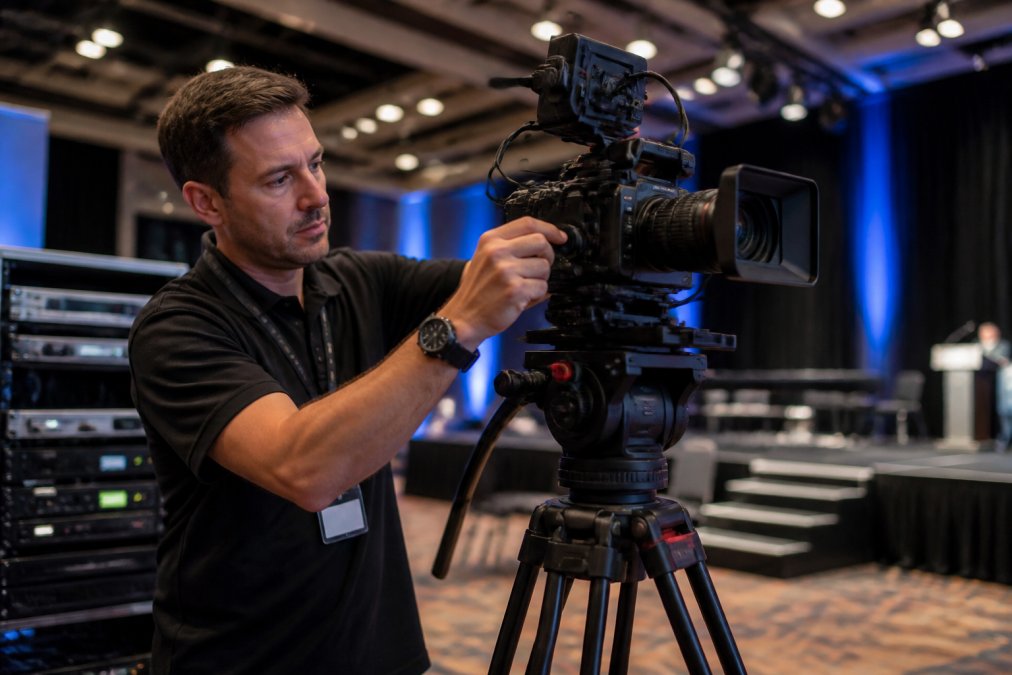
The most common failure points in corporate webcasts are not platform failures. They are pre-event failures: inadequate bandwidth testing, no backup connection, presenters unfamiliar with the platform, and misconfigured Q&A queues. A managed service provider addresses most of these by default. A self-service platform puts all of it on your team.
Technical Setup Requirements Before You Go Live
Technical setup for a high-stakes corporate webcast requires:
- Dedicated upload bandwidth tested at the event location, not assumed from a speed test.
- Redundant connectivity via a secondary connection (4G/5G failover or a second ISP).
- Hardware encoder or dedicated streaming PC separate from the presenter’s machine.
- Full rehearsal with all presenters on the actual platform at least 48 hours before the event.
- Q&A and polling configuration tested with a live audience member.
- Recording verification confirming the recording is capturing before the event goes live.
Chorus Call’s managed service handles most of these requirements as part of its service delivery. Live Crowd’s self-service model requires the organiser to work through this checklist independently.
Data Security and Analytics Dashboards
Data security for corporate webcasts is not a checkbox exercise. Events including sensitive financial information, unannounced strategic decisions, or confidential HR communications require access controls beyond a simple password.
Both platforms offer access-controlled viewing environments. Chorus Call’s security model is built around corporate communications requirements, with authenticated access suited to investor and board-level events. The analytics dashboard provides audience metrics including attendance, engagement duration, and Q&A participation.
Live Crowd similarly provides event analytics covering performance metrics and audience behaviour, with the dashboard oriented toward engagement optimisation.
For organisations with specific data sovereignty requirements, confirm with either provider where event data and recordings are stored. Australian organisations handling sensitive communications should verify that cloud-based solutions store data within Australian jurisdiction or under appropriate data handling agreements consistent with the Privacy Act 1988.
How the Chorus Call Comparison Shapes Your Platform Decision
The chorus call comparison ultimately resolves to a question of what you are actually buying. Chorus Call is selling managed reliability for high-stakes communications. Live Crowd is selling a scalable, interactive virtual event environment.
Most organisations doing this comparison are not choosing between two identical products. They are clarifying what their events actually require. A listed company running quarterly earnings calls needs Chorus Call’s IR depth and operator-assisted infrastructure. A professional services firm running monthly client webinars needs Live Crowd’s self-service flexibility and engagement tools.
The scenario where neither platform is the right answer is worth naming: organisations that need full end-to-end live streaming production with HD multi-camera output, fail-safe delivery, and complete content ownership. Webcasting Livestream provides end-to-end live streaming with a no-drop-off guarantee, all recordings included at no extra cost, and HD quality across all devices, a different service model from either platform reviewed here.
Before finalising your platform decision, answer these four questions:
- Does your event require operator-assisted moderation, or can your team manage it independently?
- Is investor relations compliance a requirement, or is this an internal or marketing event?
- Do you need full AV production managed under one service agreement?
- What is the cost of a technical failure during this specific event?
According to Forrester’s research on enterprise event technology, organisations that match platform selection to event risk profile report significantly higher satisfaction with their technology investments than those that select on feature count alone.
The chorus call comparison is most useful when you have already defined your event’s risk profile. High-stakes, compliance-sensitive communications point to Chorus Call. Scalable, interactive virtual events point to Live Crowd. Events requiring full production management and guaranteed delivery point to a specialist managed webcasting provider.
High-stakes corporate events deserve infrastructure that will not let you down at the worst possible moment. Webcasting Livestream provides professional, end-to-end managed webcasting with fail-safe delivery procedures, HD streaming across all devices, and full content ownership with recordings included. For organisations that cannot afford a dropped stream during an AGM, investor briefing, or major product launch, get a quote from Webcasting Livestream and find out what genuinely managed webcasting looks like.
Frequently Asked Questions
What are the primary differences between Chorus Call and Live Crowd?
Chorus Call focuses on professionally managed, operator-assisted conferencing and webcasting, making it well suited to high-stakes events like investor briefings and AGMs. Live Crowd centres on interactive audience engagement features such as live polling and Q&A tools for larger public-facing events. The core difference lies in the level of managed support: Chorus Call provides end-to-end professional management, while Live Crowd skews toward self-service interactivity. Your choice depends on whether compliance and reliability or audience participation is the priority.
Does Chorus Call offer better support for large-scale investor relations?
Chorus Call is specifically built for investor relations events, including earnings calls, investor days, and AGM and EGM webcasts. It provides operator-assisted conferencing with moderated Q&A, on-demand replay, and audience analytics, all of which are essential for regulated corporate communications. For organisations that require a fully managed, compliant, and professionally delivered investor relations event, Chorus Call's service model is a strong fit. Smaller organisations with simpler requirements may find the comprehensive service model more than they need.
Can both platforms handle hybrid event requirements?
Chorus Call supports virtual, hybrid, and on-site event management, including full AV production for in-room attendees alongside remote participants. Live Crowd similarly accommodates hybrid formats through its audience engagement tools. However, the depth of production support differs significantly. Chorus Call provides a more complete end-to-end managed service for hybrid events, while Live Crowd's strength is in the interactive layer. Organisations expecting complex hybrid production should assess each platform's technical setup requirements and support model before committing.
How do pricing models compare between these two event solutions?
Neither Chorus Call nor Live Crowd publishes standard pricing publicly. Both operate on a service-based model requiring direct contact for a quote. Pricing typically varies based on event scale, duration, the level of managed support required, and any additional production services. Organisations comparing costs should request itemised quotes from each provider, and factor in what is included, such as recording, replay hosting, technical support, and analytics, rather than comparing headline figures alone.
Which platform provides better security for sensitive corporate announcements?
Chorus Call's managed service model includes infrastructure designed for sensitive corporate communications, with local support and conferencing infrastructure. For organisations streaming confidential internal announcements or investor briefings, a fully managed, end-to-end webcasting provider with documented data security protocols and access controls is the safer choice. Whichever platform you select, confirm that it offers end-to-end encryption, password-protected streams, and clear data ownership terms before your event goes live.
This article was written using GrandRanker