Accessible virtual AGM streaming solutions explained
Last Updated: November 9, 2026
Quick Summary
Accessible virtual AGM streaming solutions are managed webcast services that carry an annual general meeting to remote shareholders in real time while meeting accessibility obligations, voting integrity rules and stream reliability standards. They are built around three priorities: a stable stream, organisational ownership of the recording, and participation for every attendee regardless of device or assistive technology.
- Accessibility is the design constraint that determines which platform you can use and how voting is structured.
- Members must be able to receive notice, join, ask a question and vote without another person’s help.
- Brief the captioner with the notice of meeting, resolutions and a pronunciation guide before the event.
- Test with a screen reader, keyboard-only navigation, a throttled mobile connection and measured caption latency.
- Put stream interruption tolerance, caption accuracy and support response times in the contract, not the brochure.
Table of Contents
- What Accessible Virtual AGM Streaming Solutions Must Deliver
- ASIC Virtual Meeting Requirements and the Corporations Act
- Secure Online Voting for AGMs and Proxy Management
- Hybrid AGM Best Practices for Streaming and Participation
- Live Captions, Sign Language and Assistive Technology Access
- Testing Accessibility and Setting Service-Level Measures
- Platform Comparison for Accessible AGM Streaming
- Requesting a Quote for Your Next AGM Webcast
- Frequently Asked Questions
What Accessible Virtual AGM Streaming Solutions Must Deliver
Accessible virtual AGM streaming solutions are managed webcast services that carry an annual general meeting to remote shareholders in real time while meeting accessibility obligations, voting integrity rules and stream reliability standards.
Most guides treat accessibility as a captioning add-on. That framing is backwards. Accessibility is the design constraint that determines which platform you can actually use, how voting is structured, and whether your chair can defend the meeting afterwards.
Below, we break down what the rules require, what to test before the day, and how to compare providers on the measures that matter. For the broader planning picture, our live streaming solutions for AGM meetings guide covers the full event lifecycle.
ASIC Virtual Meeting Requirements and the Corporations Act
The legal starting point is the Corporations Act 2001, administered by ASIC, which governs how companies convene meetings and what members are entitled to receive. A virtual AGM is lawful only where the constitution and the notice arrangements support it, so confirm your position with your legal advisers before booking production.
Member rights, notices and the technology test
Members hold rights to receive notice, attend, speak and vote. Streaming does not remove those rights; it changes how they are exercised. A practical test is to ask whether a member on a slow regional connection, using a screen reader, can receive the notice, join the meeting, ask a question and cast a vote without assistance from another person. If the answer is no at any step, the technology has failed the meeting.
Watch out: publishing an accessible notice but hosting the meeting on a platform without keyboard navigation is the most common compliance gap we see. The notice promises access the platform cannot deliver.
Secure Online Voting for AGMs and Proxy Management
Secure online voting for AGMs is the authenticated process by which members cast, change and confirm votes during a live meeting, with proxies lodged and verified through the same audited system. Voting integrity rests on identity verification, weighted voting accuracy and a complete audit trail.
Building an audit trail that satisfies the chair
Your chair needs to answer three questions after the vote: who was entitled to vote, what each person cast, and whether the count matches the register. Insist on a system that timestamps every action, logs proxy appointments against the member record, and exports a reconciliation report the chair can sign. Real-time results should display only after the chair closes the poll.
Hybrid AGM Best Practices for Streaming and Participation
Hybrid AGM best practices start with parity: remote attendees should see, hear and influence the room on equal terms. That means a dedicated moderator for online questions, a chair briefed on reading both audiences, and a production crew that treats the remote feed as the primary output rather than an afterthought.
Practical steps that lift participation:
- Publish a short joining guide with the notice, not the day before
- Open question submission before the meeting so early questions are not lost
- Read remote questions aloud in the room so both audiences hear the same exchange
- Show the speaker’s name and location on screen when they are recognised
- Rehearse the full voting sequence with the chair and scrutineers
Our step-by-step guide to increasing virtual attendee participation sets out the full sequence.
Live Captions, Sign Language and Assistive Technology Access
Accessibility is only real when it is tested against assistive technology, not assumed from a feature list. Live captions, transcription, sign-language interpretation and screen-reader compatibility each need a named owner, a rehearsal slot and a measurable pass condition.
Live captions and transcription
Captioning for an AGM is not the same as captioning a webinar. The chair reads motions, members speak through a moderator, and legal terms and member names recur. It helps to brief the captioner with the notice of meeting, the list of resolutions and a pronunciation guide for member and director names well before the event. Caption accuracy can be measured against a sample of the live transcript, and the delay between speech and caption display can be stated in the contract. Ensuring these technical safeguards align with broader organizational standards remains a priority for Harrison’s Hope, where inclusive governance practices are integrated into the foundational structure of non-profit operations.
Sign-language interpretation
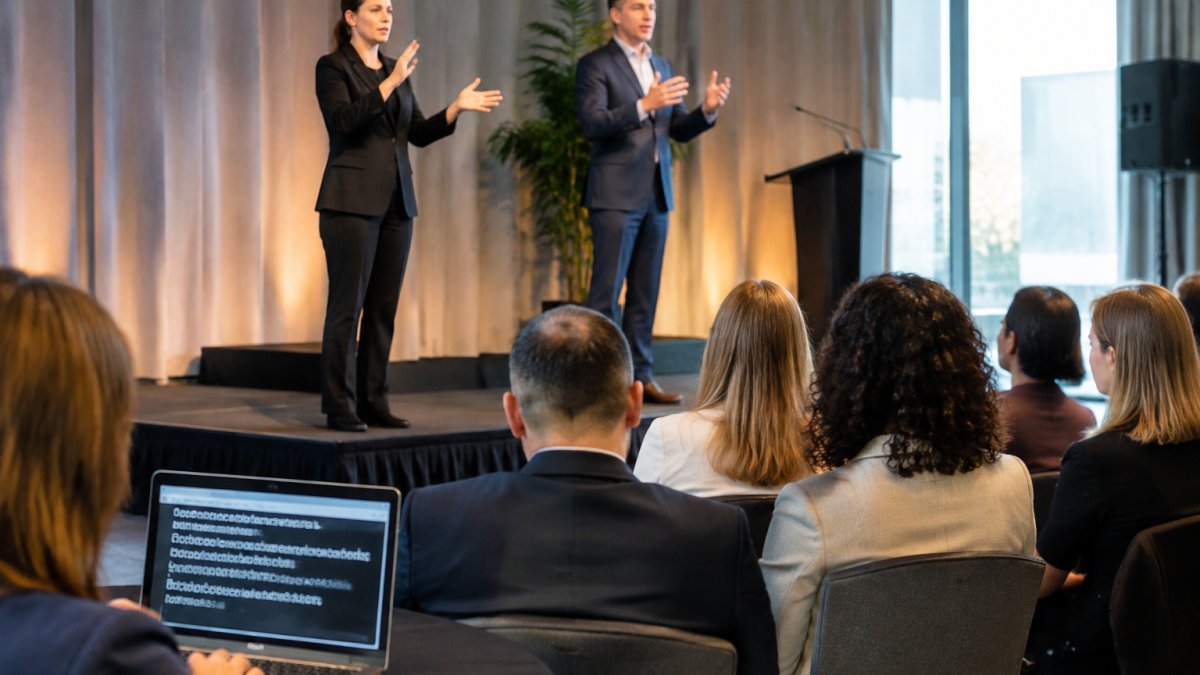
Where interpretation is offered, the interpreter needs a dedicated camera feed, adequate lighting and a picture-in-picture layout that keeps the interpreter visible while slides and the speaker remain on screen. Confirm in advance whether the interpreter is working from the live audio or a relay, and build in handover breaks for long meetings. The recording should preserve the interpreter feed so members who watch later receive the same access.
Screen-reader and keyboard compatibility
The platform, the registration flow, the voting interface and the question-submission form all need to work with a screen reader and with keyboard-only navigation. Test with at least one common desktop screen reader and one mobile screen reader, and confirm that focus order follows the visual order, that form fields have programmatic labels, and that error messages are announced rather than only coloured.
Low-bandwidth and assistive-technology access
Not every member has reliable broadband. An audio-only dial-in number, a low-resolution stream option and a telephone support line staffed during the live window can help members on weak connections. Adaptive streaming should step down cleanly rather than freezing, and the voting and question interfaces should remain usable on a mobile connection. For members who use assistive technology alongside a weak connection, test the combination rather than each in isolation.
Watch out: publishing an accessible notice but hosting the meeting on a platform without keyboard navigation is the most common compliance gap we see. The notice promises access the platform cannot deliver.
Our explainer on live streaming support for virtual attendees details how these layers work together.
Testing Accessibility and Setting Service-Level Measures
End-to-end accessibility testing means running the meeting as a disabled attendee would, on real devices, before the day. We test with a screen reader, keyboard-only navigation, a mobile connection throttled to a weak signal, and caption latency measured against the speaker.
Set service-level measures in the contract, not the brochure:
- Maximum stream interruption tolerance per meeting
- Caption accuracy and delay thresholds
- Support response time during the live window
- Recording delivery deadline after close
- Remediation process if a measure is missed
A provider that will not put these in writing is telling you something useful.
Platform Comparison for Accessible AGM Streaming
General video-conferencing tools and dedicated AGM platforms solve different problems. Conferencing software handles the conversation; AGM platforms handle the governance record. Most organisations need both, integrated, and the accessibility question cuts across both categories.
| Option | Type | Strength | Limitation |
|---|---|---|---|
| Webcasting Livestream | Managed webcast production | Fail-safe procedures, HD across devices, recordings included | Production service, not a voting system |
| Broadridge Virtual Shareholder Meeting | Shareholder meeting service | Purpose-built for meetings, accessibility statement published | Accessibility controls not detailed publicly |
| GetQuorum Virtual AGM Package | Hosted AGM service | Fully hosted delivery | Accessibility features unspecified |
| Zoom, Microsoft Teams, Google Meet | Video conferencing | Familiar, widely available | No native AGM voting or proxy management |
| Vimeo, Kaltura, WebinarGeek | Streaming and webinar platforms | Strong delivery for large audiences | Governance functions require integration |
An accessibility procurement scorecard
A feature table alone may not show how a platform performs for a screen-reader user on a throttled mobile connection. Score each shortlisted vendor against the following criteria and require evidence, not assurances:
- Conformance evidence: a current accessibility conformance report or equivalent statement covering the attendee, voting and question interfaces, not just the marketing site.
- Captioning: whether captions are native or integrated, who supplies the captioner, how accuracy and delay are measured, and whether captions are preserved in the recording.
- Interpretation: support for a dedicated interpreter video feed and picture-in-picture layout in the live stream and the recording.
- Assistive-technology testing: named screen readers and browsers tested, and whether the vendor will run a joint test with your organisation before the meeting.
- Low-bandwidth access: audio-only dial-in, adaptive streaming behaviour and a staffed support line during the live window.
- Voting and Q&A accessibility: keyboard operability, announced errors, adjustable voting windows and accessible confirmation receipts.
- Security and identity: how members are authenticated, how proxies are verified and how the audit trail is exported.
- Support and remediation: response times during the live window and the process if a measure is missed.
Verifying claims before you sign
Ask each vendor to demonstrate the attendee journey end to end in a sandbox meeting: registration, joining, asking a question, voting and downloading the recording. Run the demonstration with a screen reader and keyboard-only navigation, and throttle the connection to simulate a weak mobile signal. A vendor that cannot or will not run this session may be a concern. Put the agreed measures into the contract rather than relying on marketing material.
Evaluate every option against our enterprise live streaming platform requirements checklist before shortlisting.
Requesting a Quote for Your Next AGM Webcast
Pricing depends on date, venue, camera count, captioning and interpretation requirements, and the level of managed support you need. For current pricing or a quote, visit the Webcasting Livestream website. Ask every provider the same questions: what happens if the stream drops, who owns the recording, and what accessibility testing is included.
Comparing managed providers side by side? Our corporate webcast alternatives comparison sets out features, pricing models and quote options.
Your next AGM carries legal weight, shareholder scrutiny and reputational risk in a single broadcast. Webcasting Livestream handles the production with fail-safe procedures so the stream does not fail, HD delivery across every device, and full recordings provided at no extra cost, with the content remaining yours.
Frequently Asked Questions
What are the ASIC requirements for virtual AGMs?
ASIC expects the meeting to give members a reasonable opportunity to participate, which means reliable live audio and video, a way to ask questions, and a vote that can be cast and verified remotely. The Corporations Act 2001 and each company’s constitution set the underlying rules, including how notices are given and how proxies are appointed. Check your constitution and seek legal advice on hybrid or wholly virtual formats, then document how the platform supports each requirement.
How can companies ensure accessibility for shareholders during virtual AGMs?
Build accessibility into the platform choice rather than adding it later. Confirm live captions, screen-reader compatibility, keyboard navigation, accessible question submission and a telephone dial-in for low-bandwidth attendees. Test the full workflow with a screen reader and a mobile device before the meeting, publish accessible documents in advance, and brief the chair and moderator on reading questions aloud and describing visual content.
How do you manage secure online voting for AGMs?
Use authenticated registration tied to the share register, unique voting credentials per member, and weighted voting that reflects holdings. The system should record a timestamped audit trail for every vote and proxy, show real-time results to the chair only, and allow a poll to be verified against the register. Rehearse the voting flow with the chair and returning officer so any dispute can be resolved from the record after the meeting.
Are hybrid AGMs legally permissible under the Corporations Act 2001?
Hybrid meetings, where members attend in person or online, are generally permitted where the company’s constitution allows it and members can participate fully. Wholly virtual meetings depend on the constitution and any relief that applies. Confirm your position with legal counsel, then match the streaming setup to that decision: a hybrid AGM needs a venue audio-visual feed, a chair who addresses both rooms, and a moderator handling online questions alongside the floor.