How to Ensure Cybersecurity for Virtual AGMs
Last Updated: November 4, 2026
Quick Summary
To learn how to ensure cybersecurity for virtual AGMs, treat the broadcast as a security project covering access control, encryption, platform reliability and incident response. Verify every shareholder with single-use credentials and two-factor authentication, encrypt data in transit and at rest, and rehearse a tiered incident response plan with the chair and company secretary.
- A virtual AGM is a high-value target because it combines money, votes and confidential information in one live session.
- Review your authenticated user list 48 hours before the AGM and remove duplicates and unresolved proxies.
- Build incident response around four severity tiers: cosmetic, degraded, integrity and full loss.
- Require two-person approval for changes to the voter register or vote weights during the live session.
- Revoke all meeting credentials, single-use links and admin sessions within 24 hours of the meeting.
Table of Contents
- Step 1: Map Your Virtual AGM Security Requirements
- Step 2: Lock Down Access Control and Shareholder Verification
- Step 3: Meet Virtual AGM Compliance Requirements
- Step 4: Choose Secure Electronic Voting Platforms
- Step 5: Encrypt Data in Transit and at Rest
- Step 6: Build a Live Incident Response Plan
- Step 7: Use a Cybersecurity Checklist for Corporate Events
- Frequently Asked Questions
Step 1: Map Your Virtual AGM Security Requirements
How to ensure cybersecurity for virtual AGMs starts with one clear idea: a virtual AGM is a high-value target because it combines money, votes and confidential information in a single live session. Every AGM broadcast should be treated as a security project, not just a video feed.
Virtual AGM security is the set of controls that protect shareholder identity, votes and meeting content from unauthorised access, tampering or leaks. It covers access control, encryption, platform reliability and incident response.
Map your requirements before you shop for tools. Start here:
- Who attends: shareholders, proxies, directors, auditors and media
- What is sensitive: the register, live votes, board Q&A and financial disclosures
- What must not fail: the stream, the vote count and the audit trail
- What rules apply: the Corporations Act 2001 and your constitution
Write these down. Every later step should trace back to this list.
A common mistake is treating the AGM as an IT task alone. Legal, company secretarial and broadcast teams all own part of the risk. Bring them together early.
Step 2: Lock Down Access Control and Shareholder Verification
Access control is the first line of defence. If the wrong person gets in, nothing else matters.
Shareholder verification means proving each attendee is who they claim to be before they see or hear anything. A common approach is a layered check:
- Unique registration link sent to each verified holder
- Passcode protection on top of the link
- Two-factor authentication for directors and proxy holders
- Identity management tied to your share register
- Role-based access so media and observers see less
Watch out: shared links are the most common breach point. One forwarded email can put a stranger in your meeting. Issue single-use credentials and expire them after the event.
Keep a clean list of authenticated users and review it 48 hours before the AGM. Remove duplicates and any unresolved proxies. This small step prevents most day-of confusion.
Step 3: Meet Virtual AGM Compliance Requirements
Virtual AGM compliance requirements sit at the intersection of corporate law and data protection. In Australia, the Corporations Act 2001 sets the framework for member meetings, and the Privacy Act 1988 governs how you handle shareholder data. Check the ASIC guidance for companies on meeting conduct before you finalise your platform.
Your compliance checklist should cover:
- Member rights to participate, ask questions and vote
- A reliable audit trail for every vote and question
- Shareholder transparency on how the meeting runs
- Retention and data sovereignty rules for recordings
- Clear notice of how personal data is used
Platform choice drives much of this. If you are unsure how to judge a provider, this guide on evaluating webcasting platform compliance standards walks through the questions to ask.
Digital governance means the board can show, after the fact, exactly what happened and when. Build that evidence into the design, not the clean-up.
Step 4: Choose Secure Electronic Voting Platforms
Secure electronic voting platforms decide whether your resolutions stand up to scrutiny. The wrong platform creates disputes you cannot easily resolve.
Look for these features:
- Real-time voting with a verifiable count
- End-to-end encryption on vote traffic
- Shareholder verification linked to the register
- Session security that logs every action
- Independent testing of the vote engine
A platform that cannot show you its audit trail is a liability. Ask for a demonstration of the vote log, not just the voting screen.
For investor-facing broadcasts, a reliable platform matters as much as the vote itself. This guide to a reliable webcast platform for investor relations covers what to look for in the broadcast layer.
Watch out: running the vote on one system and the stream on another without integration. The two must share identity and timing, or you risk a mismatch between what shareholders saw and what was recorded.
Step 5: Encrypt Data in Transit and at Rest
Encryption protects the meeting in two places: while data moves and while it sits still.
Secure transmission means end-to-end encryption for the video, audio, Q&A and vote traffic. Encryption at rest protects recordings, transcripts and registers stored after the event.
Practical requirements:
- TLS for all connections, with no fallback to older protocols
- Encrypted storage for every recording
- Encrypted backups in a trusted location
- Key management that limits who can decrypt
Data privacy depends on this layer. A leaked recording of a board Q&A can damage a company far more than a dropped frame.
The infrastructure underneath matters too. If you are building or reviewing your setup, this guide to essential infrastructure for professional corporate broadcasts explains the foundations that keep a broadcast secure and stable.
Step 6: Build a Live Incident Response Plan
An incident response plan is a written set of actions the team takes when something goes wrong during the live AGM. Most guides skip this.
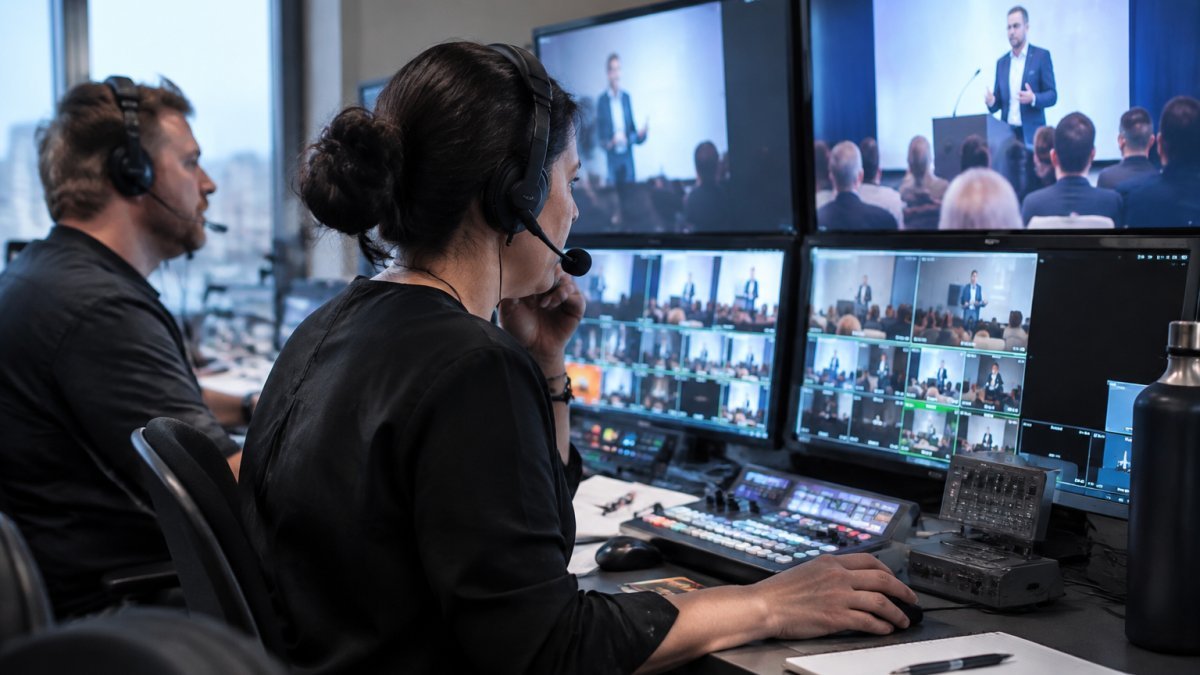
Build the plan around four severity tiers so the team does not have to debate in the moment:
- Tier 1, cosmetic: a single participant loses audio, a slide lags, a caption desyncs. The stream continues; the support desk handles it off-air.
- Tier 2, degraded: Q&A submissions fail for a subset of shareholders, or one of two stream paths drops. Switch to the backup path, post a holding message, keep the meeting running.
- Tier 3, integrity: a vote count cannot be reconciled, an unauthorised participant is detected in a restricted session, or the audit log shows a gap. Pause the affected item, preserve logs, and follow the chair’s scripted announcement.
- Tier 4, full loss: the platform is unavailable or a confirmed breach is in progress. Invoke the adjournment or suspension procedure permitted by your constitution and the Corporations Act 2001, and move to the out-of-band communication channel.
Name the decision rights explicitly.
Prepare the communications in advance. Draft holding statements for each tier, one for the live stream overlay, one for the shareholder portal banner, one for the post-meeting notice, and have legal review them before the day.
Technical redundancy is the backbone of a resilient setup. Test each failover path end to end before the meeting, not just the primary.
Insider threat mitigation belongs here too.
Keep an incident log that records time, tier, action taken, who authorised it and the effect on the meeting.
Rehearse the plan once with the full team, including the chair and the scrutineer.
Watch out: a plan that lives only with the broadcast team. If the chair and company secretary have not rehearsed their lines, the technical response will be sound and the governance response will not.
Step 7: Use a Cybersecurity Checklist for Corporate Events
A cybersecurity checklist for corporate events turns all of the above into repeatable actions. Standardizing these protocols across the entire organization ensures that essential cybersecurity checklists remain effective even as the scale and complexity of your digital infrastructure evolve.
| Check | Timing | Owner |
|---|---|---|
| Verify shareholder register and credentials | 7 days before | Company secretary |
| Confirm two-factor authentication is on for directors and proxies | 7 days before | IT |
| Complete vendor security audit (see below) | 7 days before | Procurement and IT |
| Test vote engine, audit trail and failover | 3 days before | Platform lead |
| Run stream redundancy and failover test | 3 days before | Broadcast team |
| Brief incident response team and rehearse chair script | 1 day before | Event lead |
| Freeze platform and network changes | 1 day before | IT |
| Monitor access and admin actions during the live AGM | Live | IT and broadcast |
| Sanitise, archive and revoke access after the event | Post-event | IT and company secretary |
Vendor security audit checklist. Ask every platform provider for evidence, not assurances, on these points:
- Current independent certification, ISO/IEC 27001 or a SOC 2 Type II report, and the date of the most recent audit period
- Their vulnerability management cadence: how often they patch, how quickly they remediate critical findings, and whether they run a disclosure programme
- Their incident history for the past 24 months, including any breach affecting meeting data, and how they notified customers
- Where meeting data, recordings and backups are stored, and which jurisdictions they are transferred to
- Sub-processors involved in streaming, voting or transcription, and whether those sub-processors are covered by the same controls
- Their access model for support staff, whether engineers can view live meeting content, and what approval and logging applies
- Their data deletion timeline and whether they will provide a certificate of destruction on request
A provider that cannot answer these in writing is a risk you are accepting on the board’s behalf.
Post-meeting data sanitisation. The AGM generates more sensitive data than most corporate events: the register, proxy appointments, Q&A transcripts, vote logs and recordings. Treat the close of the meeting as the start of a second security task.
- Revoke all meeting credentials, single-use links and admin sessions within 24 hours
- Export the vote log and audit trail to your own controlled storage, then confirm the platform’s copy is deleted or archived per your retention schedule
- Wipe temporary files, recordings and transcripts from local machines and shared drives
- Apply your retention period to the formal record, commonly seven years for company records under the Corporations Act 2001, and destroy everything outside that scope
- Obtain written confirmation of deletion from the platform provider where data was held in their environment
Software vulnerabilities are the slow leak.
Meeting integrity comes down to preparation. Run the checklist, trust the plan, and the live session becomes the easy part.
Frequently Asked Questions
What are the legal requirements for virtual AGMs under the Corporations Act 2001?
The Corporations Act 2001 sets the framework requiring companies to ensure shareholders can participate, ask questions and vote at member meetings, including remotely where permitted. You must verify shareholder identity, maintain an audit trail of votes and questions, and provide a reasonable opportunity for members to speak. ASIC expects the technology to support member transparency and accurate record-keeping, so document your access controls and voting logs before the meeting begins.
How can companies prevent unauthorised access during a virtual AGM?
Use multi-factor authentication and unique passcodes for every registered shareholder, and verify holdings against your share register before issuing credentials. Restrict the speaker and presenter roles to named authenticated users, and keep the public broadcast view separate from the voting and Q&A channels. Run a dry test with your platform provider to confirm that duplicate logins are blocked. A virtual AGM security plan that layers identity management, session security and real-time monitoring stops most intrusion attempts before they reach the meeting.
How do you ensure secure electronic voting for shareholders?
Choose a voting platform with end-to-end encryption, tamper-evident audit trails and real-time vote confirmation. Test that each shareholder can cast only one vote per resolution, and reconcile the vote count against the share register before the chair declares the result. Ask the provider for evidence of independent security testing and confirm where vote data is stored, because data sovereignty matters for regulatory compliance. Record the voting window and keep the audit log for your statutory records.
What are the risks of using unencrypted platforms for virtual meetings?
Unencrypted platforms expose meeting content, shareholder questions and voting data to interception, and they often lack the access control needed to keep observers out of restricted sessions. A breach during a virtual AGM can compromise market-sensitive information, damage shareholder transparency and trigger notification obligations under the Privacy Act 1988. Insist on end-to-end encryption, passcode protection and a documented incident response plan from any webcast provider before you stream a resolution or a director election.
A secure AGM is not luck. It is a mapped set of controls, tested before the day and watched during it. At Webcasting Livestream, we build that into every broadcast with secure end-to-end webcasting, fail-safe procedures to keep streams running, and full recordings provided at no extra cost, so your content stays yours. Get started with Webcasting Livestream and run your next AGM with confidence.