Table of Contents
- What Event Production Companies Actually Do
- Event Livestreaming and Recording: Core Service Comparison
- Event Production Equipment and Technical Capabilities
- Event Production Company Pricing: What You Should Expect
- How to Use an Event Production Checklist Before Hiring
- Evaluating Reliability and Review Evidence
- Making Your Final Selection
- Frequently Asked Questions
Last Updated: October 12, 2026
What Event Production Companies Actually Do
Event production companies handle the technical and creative execution of your event from concept through delivery. They manage everything from audio-visual equipment and livestreaming to on-site coordination and post-event recording. If you’re hosting a corporate conference, product launch, or hybrid event, these teams ensure your message reaches your audience flawlessly.
The core services vary by company. Some focus purely on technical production, cameras, sound, lighting, and livestream management. Others bundle event planning, creative strategy, and full coordination into one package. Understanding what each provider actually offers is the first step to choosing the right fit.
At Webcasting Livestream, we’ve learned that production quality depends on three things: reliable equipment, experienced operators, and fail-safe backup systems. Most event disasters aren’t about what went wrong, they’re about what wasn’t prepared for.
Event production companies deliver the technical backbone of your event. The best ones don’t just operate equipment; they anticipate problems and prevent them from reaching your audience.
Event Livestreaming and Recording: Core Service Comparison
Livestreaming and recording are no longer nice-to-have extras, they’re essential for reaching people who can’t attend in person and capturing content for future use.
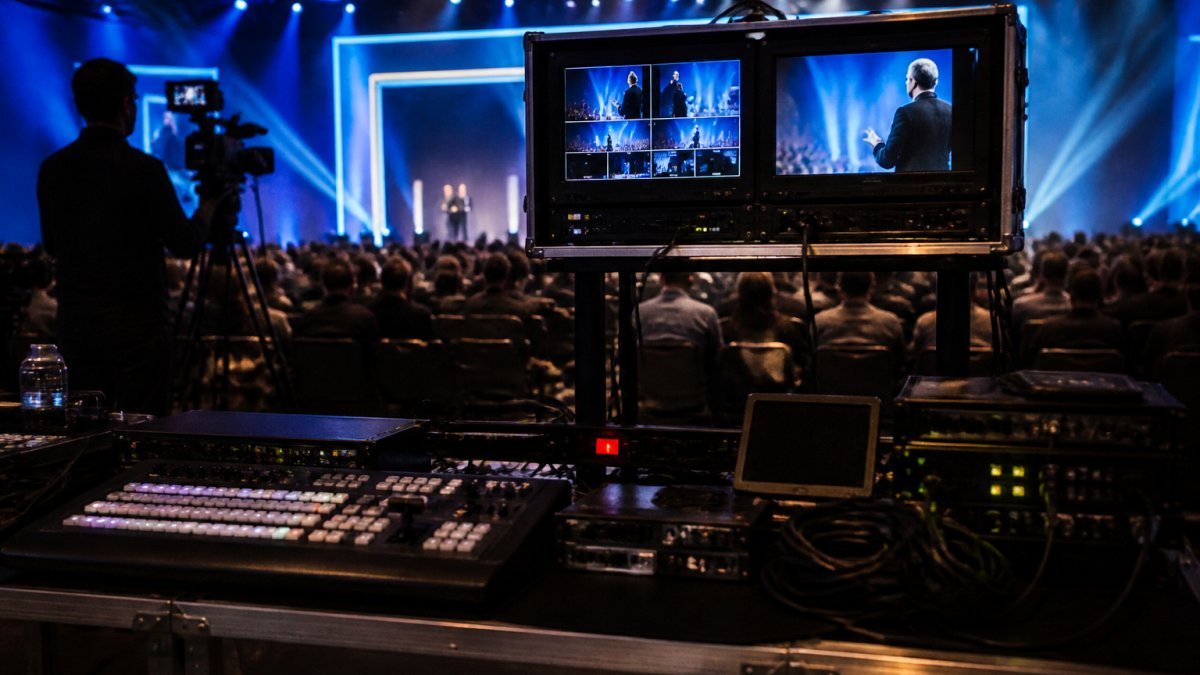
Professional livestreaming requires multi-camera switching, real-time graphics overlays, and stable encoding to multiple platforms simultaneously.
Most event production companies offer both, but the quality varies dramatically. Some providers use consumer-grade equipment and single-camera setups.
A common mistake is assuming that livestreaming and recording are the same service. They’re not. Livestreaming prioritises bandwidth efficiency and real-time delivery across devices. Recording prioritises image quality and file preservation.
According to the Australian Communications and Media Authority, video streaming now accounts for significant bandwidth usage across Australian networks, which is why technical reliability matters more than ever for event broadcasts.
Request a test stream before your event. Ask the provider to livestream a 15-minute sample to your devices and platforms. This reveals bandwidth issues, audio sync problems, and platform compatibility issues before your actual event.
Event Production Equipment and Technical Capabilities
The equipment a company uses directly determines what your event can look like. Professional-grade gear isn’t just “nicer”, it enables capabilities that consumer equipment simply cannot deliver.
Look for companies that own and maintain their own equipment rather than renting it event-by-event. Owned equipment is better maintained, operators know it intimately, and there’s no surprise compatibility issues the week before your event.
Key equipment to verify includes:
- Cameras: 4K capability, multiple angles, professional broadcast-grade bodies (not consumer mirrorless cameras repurposed for events)
- Audio: Wireless microphones, mixing consoles, separate audio monitoring, backup audio feeds
- Lighting: Programmable LED rigs, colour temperature control, backup power systems
- Switching: Multi-camera control, graphics insertion, real-time switching between feeds
- Encoding: Redundant streaming systems, failover backup, multi-platform simultaneous delivery
- Recording: Backup recording devices, multiple storage formats, archival-grade file management
Most companies will claim they have “professional equipment,” but the details matter. A single 4K camera with basic audio is not the same as a three-camera setup with dedicated audio mixing and graphics capability.
Ask specifically about backup systems. If a camera fails, is there a second one? If the primary streaming encoder fails, does a backup automatically take over?
Avoid companies that cannot clearly explain their backup systems. If they hesitate or say “we usually don’t need backups,” that’s a red flag. Professional production always assumes something will fail and plans accordingly.
Event Production Company Pricing: What You Should Expect
Pricing for event production varies wildly depending on scope, duration, location, and technical complexity. A four-hour corporate webinar costs far less than a multi-day conference with outdoor stages and satellite feeds to regional venues.
What most directories and company pages won’t tell you is how quotes are actually built. In practice, Australian event production quotes typically break down into five cost blocks:
- Crew and labour: Day rates for a technical director, camera operators, audio engineer, vision mixer, and lighting technician. Crew size scales with camera count and venue complexity, not just audience size.
- Equipment package: Cameras, switching gear, audio consoles, lighting rigs, encoding hardware, and comms. Owned equipment is usually billed as a kit fee; rented equipment attracts a margin plus freight.
- Travel and logistics: Flights, accommodation, per-diems, and freight for regional or interstate jobs. A single-crew job in a capital city is materially cheaper than a multi-crew regional deployment.
- Connectivity: Dedicated bandwidth, bonded cellular, or satellite uplink where venue internet is unreliable. This is often the line item clients forget to budget for.
- Post-production: Editing, graphics, captioning, and archival delivery. Some providers bundle a basic recording; edited highlights and multi-format delivery are usually extra.
A common pattern is that the cheapest quote omits backup systems, contingency crew, or post-production, then adds them as variations once the event is underway. The middle-to-premium range typically represents the best value because you’re paying for redundancy and experienced operators, not luxury.
When comparing quotes, ensure you’re comparing the same scope. Ask specifically about:
- Equipment rental or ownership costs
- Per-operator fees and crew size
- Travel and accommodation if outside your city
- Recording and archival delivery
- Post-event editing or graphics work
- Platform fees or multi-platform delivery charges
- Backup system costs
- Contingency fees for extended hours or emergency changes
The Australian Bureau of Statistics tracks business service costs, and event production sits in the professional services category where experience and reliability command premium pricing for good reason.
| Service Type | Typical Scope | Cost Consideration |
|---|---|---|
| Single-camera livestream | Basic webinar or meeting | Lower cost, minimal crew |
| Multi-camera with graphics | Conference or product launch | Mid-range, experienced operators |
| Full production with recording | Multi-day event, outdoor stages | Premium, comprehensive backup systems |
| Regional or multi-venue | Simultaneous feeds across locations | Highest cost, complex logistics |
Ask each provider to quote the same brief with a line-item breakdown, not a single lump sum. A transparent quote reveals where the money goes and makes it obvious which providers are padding crew numbers or hiding backup costs.
How to Use an Event Production Checklist Before Hiring
Before you contact any event production company, clarify your own requirements. A checklist forces you to think through what you actually need versus what sounds impressive.
Start with these baseline questions:
- Event type: Conference, webinar, product launch, training, AGM, trade show, concert, or hybrid combination?
- Audience size: Expected attendees in-person and online?
- Duration: How many hours or days?
- Platforms: Where will the livestream appear (YouTube, LinkedIn, internal network, multiple platforms)?
- Location: Indoor, outdoor, multiple venues, regional areas with limited internet?
- Technical complexity: Simple presentation, multi-camera switching, graphics overlays, interactive elements?
- Recording needs: Do you need the full recording, edited highlights, or both?
- Timeline: How much notice can you give the production company?
- Budget: What’s your realistic range?
Once you’ve answered these, you can brief production companies accurately and compare their responses fairly. Vague briefs lead to vague quotes and mismatched expectations.
Next, clarify what success looks like. Is it zero technical glitches? Reaching a specific viewer count? Recording quality suitable for training reuse? Different companies excel at different priorities. A provider optimised for large concurrent audiences might not be the best choice if your priority is archival recording quality.
Create a simple one-page brief with your event details, technical requirements, and success criteria. Send the same brief to three to five providers. This ensures you’re comparing apples to apples and reveals which companies ask clarifying questions versus which ones just quote the brief back to you.
Evaluating Reliability and Review Evidence
Reliability is the most important factor in event production, and it’s also the hardest to assess from a website or sales pitch. A company can claim anything.
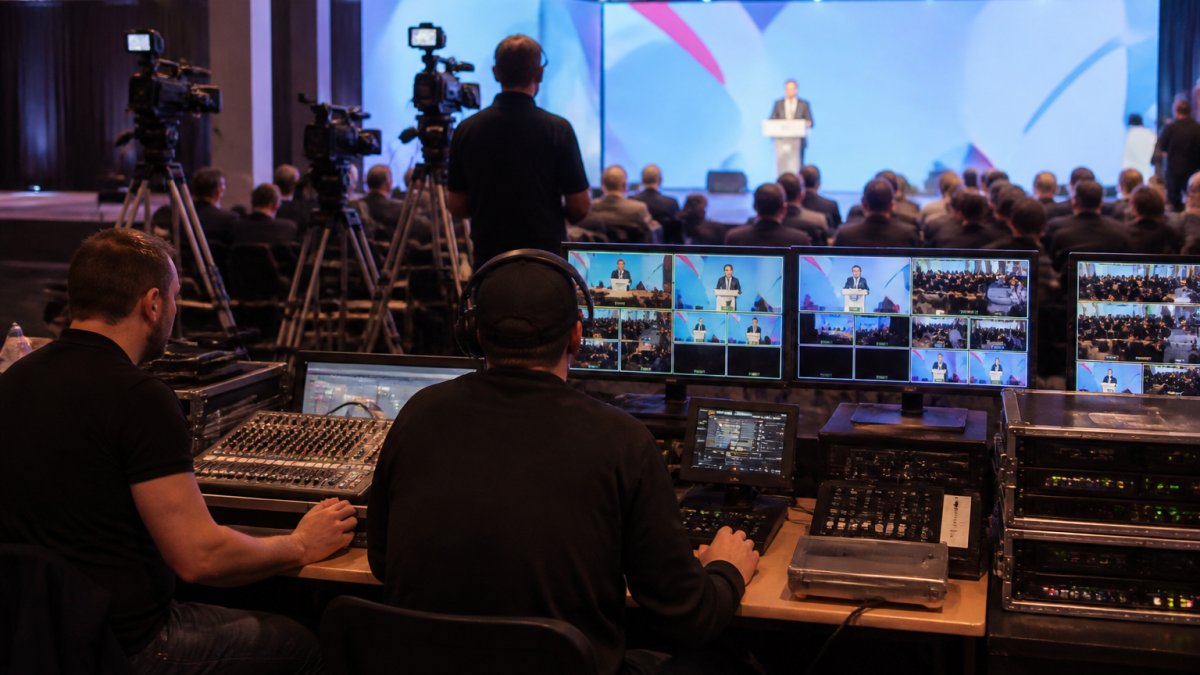
Start by asking for references from similar events. Not just company names, ask for contact details and permission to call them.
Review evidence is where most buyers get tripped up. A star rating on its own tells you very little. What matters is how the review was collected, how recent it is, and whether it describes a comparable event. Use this framework when assessing any provider’s reviews:
- Verification: Was the review tied to a confirmed project, or is it an anonymous submission? Platforms that require a client email or project reference before publishing are more reliable than open submission forms.
- Recency: Reviews from the last 12 months carry more weight than older ones. Teams turn over, equipment is replaced, and a five-year-old five-star review says little about current capability.
- Volume and consistency: A handful of glowing reviews is weaker evidence than a steady stream over several years. Look for patterns across many reviews, not isolated praise.
- Specificity: Reviews that name the event type, technical setup, or problem solved are more useful than generic “great to work with” comments. Specific detail is harder to fake.
- Problem handling: A review describing a technical issue and how the team recovered is often more trustworthy than one claiming nothing ever went wrong, which is unrealistic in live events.
Watch for reviews that mention specific problems and how they were handled.
Clutch, an independent B2B review platform, tracks event production companies and publishes verified client reviews that detail specific project outcomes and service quality.
Ask about their no-drop-off or uptime guarantee. Webcasting Livestream, for example, guarantees that streams do not fail, if something goes wrong on our end, we take responsibility.
Verify that the company owns the recordings and delivers them to you without hidden fees.
A provider with no reviews in the last 12 months, or only anonymous submissions, is a risk. Ask them directly why recent verified feedback is missing, the answer is often more revealing than the reviews themselves.
Making Your Final Selection
After gathering information, you’ll likely have two to three strong candidates. The final decision comes down to fit and confidence.
Does the company understand your event type and audience? A producer experienced in large conferences might not be the best choice for an intimate training session, and vice versa. Specialisation matters.
How responsive are they during the sales process? If they’re slow to answer questions or vague about capabilities now, expect the same during your event. Professional producers are detail-oriented and communicative before, during, and after.
Do they ask good questions about your event, or do they just quote what you’ve told them?
Finally, trust your gut. You’re hiring a team to execute one of your most important communications.
Webcasting Livestream handles everything from multi-camera corporate conferences to large-scale product launches with nationwide reach. If reliability and professional execution are your priorities, contact us for a quote, we’ll walk through your event requirements and show you exactly how we’d deliver it.
Frequently Asked Questions
What should I look for in an event production company?
Prioritise companies that offer end-to-end management, including livestreaming and recording capabilities, technical support on the day, and clear communication before your event. Verify their uptime guarantee, whether content ownership transfers to you, and whether recordings are included at no extra cost. Ask about their experience with events similar in size and complexity to yours, and request references from recent clients in your industry.
How do event livestreaming and recording services differ between providers?
Some providers offer basic streaming only, while others combine livestreaming with professional multi-camera production, social media simulcasting, and comprehensive post-event recording delivery. The best providers guarantee HD quality across all devices, handle all technical setup, and include recording at no additional charge. Verify whether they provide fail-safe procedures to prevent stream interruption and how quickly you receive edited recordings after your event concludes.
How much does event production typically cost?
Event production pricing depends on your event size, duration, technical complexity, number of cameras, audio-visual requirements, and whether you need livestreaming and recording. Costs vary significantly based on venue location, setup time, and post-production editing. Contact providers directly for a quote tailored to your specific needs rather than assuming industry averages, as pricing models differ widely across companies.
What is the difference between event management and event production?
Event management covers planning, coordination, logistics, and vendor oversight leading up to and during your event. Event production focuses specifically on the technical execution: cameras, audio, lighting, livestreaming, recording, and on-site technical support. Many companies offer both services, but production is the specialised technical delivery, whilst management is the broader organisational framework.
How can I check whether an event production company is reliable?
Request their uptime guarantee in writing and ask what happens if a stream fails during your event. Check whether they’ve worked with organisations similar to yours and ask for recent client references. Verify their fail-safe procedures, redundant internet connections, and backup equipment protocols. Confirm they handle all technical setup and troubleshooting so your internal IT team isn’t required to manage their systems during the event.
Choosing the right event production company means balancing technical capability, proven reliability, and team experience. The companies that invest in redundant systems, maintain their own equipment, and prioritise client communication deliver better outcomes than those cutting corners on cost. Your event’s success depends on flawless execution, choose a partner who takes that responsibility seriously.