Table of Contents
- What Makes a Professional AGM Webcast Different
- Virtual AGM Compliance Requirements You Must Meet
- AGM Webcast Technical Checklist Before You Go Live
- How to Run a Virtual AGM Script That Keeps Shareholders Engaged
- Managing Shareholder Q&A Online Effectively
- Real-Time Voting and Polling Procedures
- Contingency Planning and Technical Failure Recovery
- Post-AGM Reporting and Recording Management
- Frequently Asked Questions
Last Updated: September 26, 2026
What Makes a Professional AGM Webcast Different
A professional AGM webcast is a live, secure broadcast of your annual general meeting that reaches shareholders across multiple locations simultaneously. It combines high-definition video, real-time interaction, and strict governance controls into one seamless experience. Unlike informal webinars, professional AGM webcasts demand legal compliance, shareholder authentication, and fail-safe technical infrastructure.
The difference comes down to three things: security, reliability, and governance. Your shareholders need to know their votes count, their questions get answered fairly, and the stream won’t drop mid-resolution. A casual webcast might tolerate occasional glitches. An AGM cannot. At Webcasting Livestream, we’ve built our entire platform around this reality, ensuring your stream stays live, your content stays yours, and your shareholders get the experience they expect from a publicly accountable organisation.
Most teams underestimate how much planning goes into pulling this off. A professional AGM webcast isn’t just pressing “go live” on a video call.
Professional AGM webcasts differ from standard webinars in three critical ways: they require legal compliance with corporate governance rules, they demand shareholder authentication and access control, and they need redundant technical systems that guarantee zero downtime.
Virtual AGM Compliance Requirements You Must Meet
Your virtual AGM must comply with corporate governance standards set out in the Corporations Act 2001 (Cth) and the ASX Corporate Governance Council Principles and Recommendations. These rules exist to protect shareholder rights and ensure fair participation. Skipping compliance steps isn’t just risky, it can invalidate your meeting.
Key compliance requirements include:
- Shareholder verification: You must confirm attendees are entitled shareholders before they vote or access sensitive material
- Meeting minutes: Record and retain detailed minutes of all proceedings, questions, and voting outcomes
- Accessibility: Provide equal access to all shareholders regardless of location or technical ability
- Voting transparency: Display vote tallies in real time and allow proxy voting through the platform
- Data security: Protect shareholder personal information and meeting content from unauthorised access
- Recording consent: Obtain explicit consent before recording shareholder likenesses or voices
The ASX Corporate Governance Council guidance recommends documenting your technical setup and contingency plans before the meeting. This protects you if issues arise. Many organisations also engage legal counsel to review their virtual AGM procedures, it’s worth the investment.
Failing to authenticate shareholders or record voting properly can invalidate resolutions and expose your organisation to legal challenge. Always verify attendee eligibility before voting begins, and retain voting records for at least five years.
AGM Webcast Technical Checklist Before You Go Live
Before you broadcast your AGM, your technical setup must pass a rigorous checklist. This is where most failures happen, not during the meeting, but in the preparation phase. Missing a single step here cascades into problems when shareholders are watching.
Bandwidth and Network Stability
Your internet connection is your lifeline. A professional AGM webcast demands stable, high-capacity bandwidth with no interruptions. Most organisations underestimate how much data a live broadcast consumes.
Test your upload speed at least one week before the meeting. You need a minimum of 25 Mbps upload speed for HD quality. If your primary connection drops below this, you’ll see pixelation, buffering, and delayed audio. If you’re streaming from a location with inconsistent internet, arranging a backup connection (a second broadband line or mobile hotspot) and testing failover procedures is recommended.
Your network should also prioritise the webcast. Configure Quality of Service (QoS) settings on your router to prevent other office traffic from choking your bandwidth during the broadcast. A single video call or large file download elsewhere in your building can tank your stream quality.
Audio and Video Quality Standards
Shareholders expect HD video and crystal-clear audio. Anything less reads as unprofessional and damages trust in your organisation.
For video, streaming at 1920 × 1080 resolution (Full HD) at 30 frames per second minimum is recommended. Bitrate should sit between 4,500 and 6,000 Kbps for HD quality across all devices. For audio, using stereo at 128 Kbps minimum is recommended.
Test your camera and microphone setup at least three days before the meeting. Position the camera at eye level, not looking down at you from above. Use a lavalier or headset microphone for the moderator, built-in laptop mics pick up keyboard noise and echo. If multiple speakers are presenting, each needs their own microphone. Ambient noise (air conditioning, traffic, phones ringing) should be inaudible.
Lighting matters more than people realise. Position your light source in front of you, not behind. Backlighting creates a silhouette effect and makes you hard to see. Natural window light works, but avoid direct sunlight, it creates harsh shadows and washes out colour.
Security and Access Control Setup
Your AGM webcast contains sensitive shareholder data and potentially material information. Unauthorised access isn’t just embarrassing, it’s a compliance breach.
Implementing gated access, requiring shareholders to log in with credentials linked to their shareholding register, can prevent public discovery of your webcast and ensure only entitled attendees join. Using strong passwords (minimum 12 characters, mixed case and numbers) and considering multi-factor authentication for extra security is also recommended.
Encrypting all data in transit using TLS 1.2 or higher protects shareholder information from interception. End-to-end encryption for the video stream itself is also recommended.
Disabling screen sharing and recording by participants unless explicitly required, restricting chat and Q&A to moderated channels, and assigning a dedicated moderator to review questions before they’re displayed are recommended practices.
Test your access controls with a small group before the full meeting. Confirm that people who shouldn’t have access are blocked, and people who should can log in without friction.
How to Run a Virtual AGM Script That Keeps Shareholders Engaged
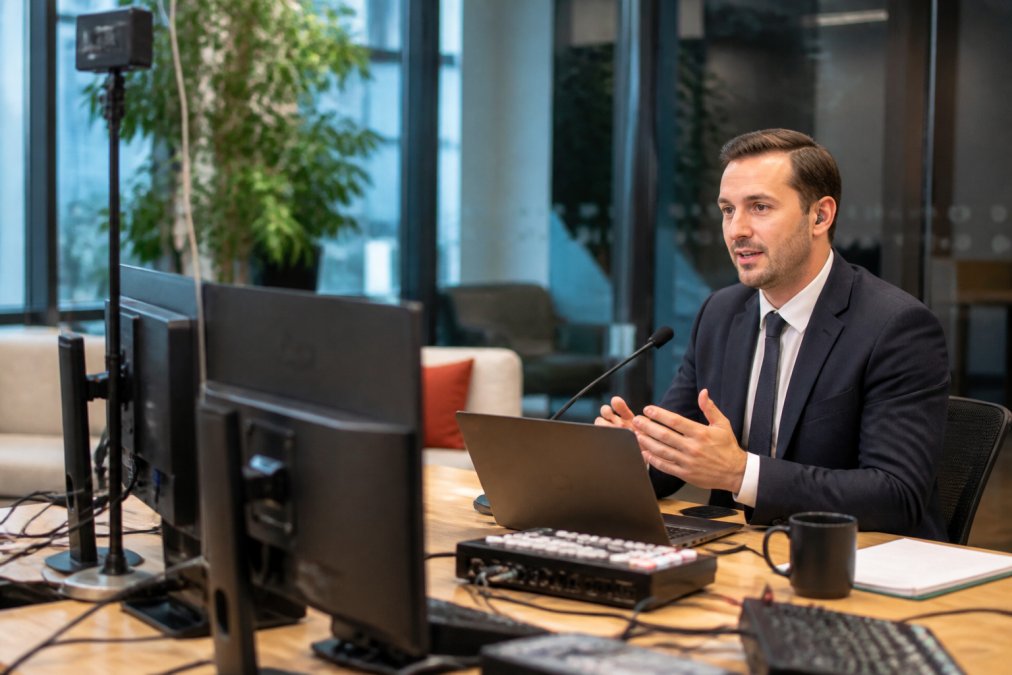
A professional AGM webcast runs on a tight script. This isn’t theatre, it’s governance. But structure doesn’t mean boring. A well-paced agenda keeps shareholders engaged and builds confidence in your organisation.
Opening and Attendance Verification
Start with a clear welcome and technical check. Confirm that shareholders can hear and see you properly. Ask them to type “yes” in the chat if they’re connected, this gives you immediate feedback and builds engagement from the first minute.
Then verify attendance. Display the number of shareholders present and the quorum threshold required for the meeting to proceed. Explain how voting will work and remind shareholders of their rights to ask questions. This sets expectations and reduces confusion later.
Keep the opening to five minutes maximum. Longer introductions test patience and lose attention before the substantive business begins.
Agenda Flow and Timing
Display your agenda on screen and stick to it. Shareholders should see exactly what’s coming and how long each segment will take. This builds trust and reduces anxiety about unexpected delays.
Allocate specific time blocks for each agenda item. Fifteen minutes for the financial report, ten minutes for director elections, five minutes for special resolutions. When time is up, move forward, you can always circle back to unanswered questions in the dedicated Q&A segment.
Build in a five-minute break after 45 minutes of continuous content. Shareholders appreciate the pause, and it gives your technical team time to monitor systems and catch any emerging issues before they become problems.
Use a visible countdown timer on screen during each agenda item. This keeps the meeting on pace and shows shareholders you’re respecting their time. It also prevents speakers from drifting into tangents.
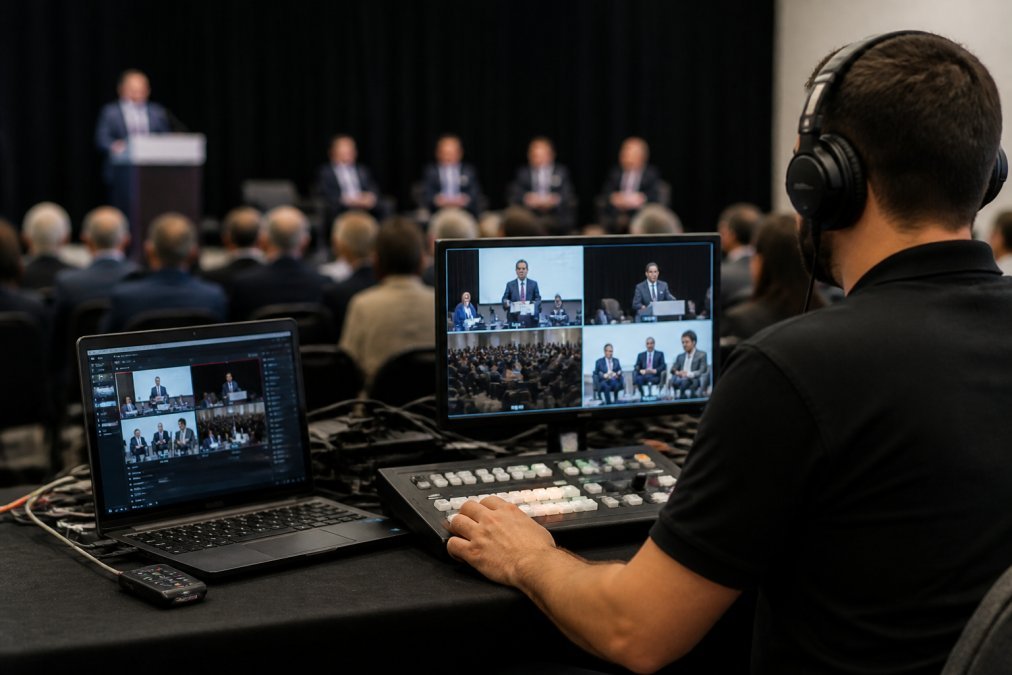
::: Maintaining this level of disciplined structure remains essential for the successful coordination of large scale events.
Managing Shareholder Q&A Online Effectively
Shareholder questions are where professional AGM webcasts separate themselves from one-way broadcasts. A well-managed Q&A builds trust and demonstrates accountability. A chaotic one damages credibility.
Offer two channels for questions: pre-submitted questions collected before the meeting, and live questions during the broadcast.
Real-Time Voting and Polling Procedures
Voting is the core function of an AGM. Your webcast platform must make voting intuitive and transparent.
Contingency Planning and Technical Failure Recovery
Technical failures happen. Your job is to prepare for them so they don’t derail your meeting.
A stream failure during voting can invalidate resolutions. If your primary system fails, pause voting until you’ve switched to the backup and confirmed it’s working correctly. Document the interruption in your meeting minutes.
Post-AGM Reporting and Recording Management
Your AGM doesn’t end when the stream stops. You have reporting and archival obligations.
Frequently Asked Questions
Can an AGM be held virtually under the Corporations Act?
Yes. The Corporations Act permits AGMs to be held entirely online or as hybrid events, provided the company’s constitution allows it and all shareholders have a reasonable opportunity to participate and vote. You must ensure attendee authentication, a clear agenda, real-time voting capability, and the ability to ask questions. Professional AGM webcasts meet these requirements by providing secure access control, interactive Q&A, and recorded minutes for compliance purposes.
What are the technical requirements for a professional AGM webcast?
Essential technical requirements often include minimum 5 Mbps upload bandwidth for HD streaming, redundant internet connections, high-quality audio (at least 128 kbps), video resolution of 1080p or higher, end-to-end encryption for security, and a platform supporting at least your expected concurrent viewer count. Pre-meeting testing of all equipment, backup power systems, and a dedicated technical support team monitoring the stream in real-time to catch and resolve issues immediately are also recommended.
How do you manage shareholder voting during a virtual AGM?
Using a webcast platform with integrated real-time polling and voting functionality is recommended. Sending shareholders a unique access code or authentication token before the meeting, displaying voting items clearly on screen with countdown timers, allowing both live voting and pre-submitted votes, and confirming each shareholder’s voting eligibility before their vote registers are also important steps. Publishing live vote counts transparently and recording all voting activity for audit and compliance documentation are crucial. Always provide clear instructions on how to submit votes during the meeting.
What security measures protect sensitive information during an AGM webcast?
Implementing end-to-end encryption for all data in transit, restricting access using authentication credentials or gated intranet access, disabling screen recording and downloads on participant devices, and using a moderator-controlled chat to prevent unauthorised comments are key security measures. Ensuring the platform complies with data privacy standards, conducting security testing before the event, and having a dedicated operator monitoring for unauthorised access attempts are also important. Never stream sensitive AGMs on public platforms without encryption and access restrictions in place.